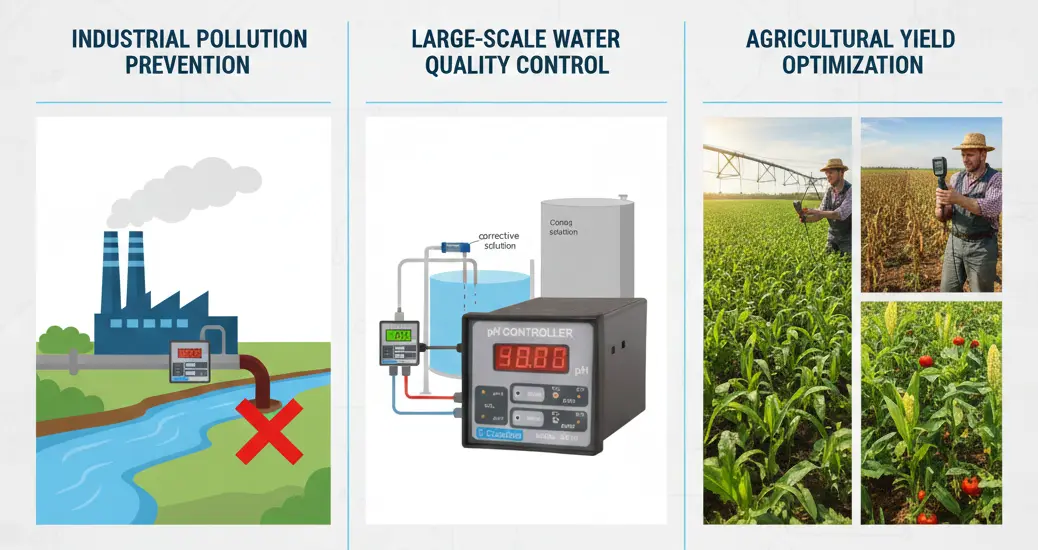

Major Advantages of pH Controller

pH Temperature Compensation: Why Readings Change With Temperature And What ATC Actually Corrects

In short: ATC corrects the electrode’s response — its mV-per-pH slope changes with temperature (about 59 mV/pH at 25 °C). It does not correct the fact that the sample’s actual pH changes with temperature. For comparable results, measure at a consistent temperature or record the temperature with every pH reading.

The Electrode Effect (Corrected by ATC)

A pH electrode follows the Nernst equation: its output per pH unit rises with temperature — about 54 mV at 0 °C, 59 mV at 25 °C and 66 mV at 60 °C. Without correction, readings away from pH 7 are wrong when the sample is not at calibration temperature. ATC uses a temperature sensor (often PT100 or NTC) to apply the right slope.

TemperatureApprox. slope
0 °C54 mV/pH
25 °C59 mV/pH
60 °C66 mV/pH
90 °C72 mV/pH

The Sample Effect (Not Corrected)

Many solutions genuinely change pH as they warm or cool, because chemical equilibria shift. Pure water, for example, reads about pH 7.0 at 25 °C but lower when hot. ATC cannot know your sample’s chemistry, so it does not correct this.

Practical Tips

  • Calibrate near the process temperature where possible
  • Always record temperature with pH for lab and QC results
  • Use electrodes rated for the process temperature
  • Allow time for the electrode to reach sample temperature
  • Check the temperature sensor itself — a wrong temperature gives a wrong slope

Online controllers in the pH range accept a temperature input for compensation. Background: how pH measurement works.

Mistakes to Avoid

  1. Assuming ATC makes hot and cold samples comparable.
  2. Faulty temperature probe left in place.
  3. Electrode not rated for high temperature.
  4. Reading before the electrode stabilises.

Quick Checklist

  • ATC probe working
  • Calibration near process temperature
  • Temperature recorded with pH
  • Electrode temperature rating checked

Frequently Asked Questions

What does automatic temperature compensation do on a pH meter?

It corrects the electrode’s mV-per-pH slope for the measured temperature.

Does ATC correct the sample’s pH to 25 °C?

No. The sample’s real pH can change with temperature, and ATC does not correct that.

Why does my hot sample read different after cooling?

Its true pH has changed with temperature, which is normal for many solutions.

What is the Nernst slope at 25 °C?

About 59.16 mV per pH unit.

Should temperature be recorded with pH?

Yes, especially for lab and quality results, so readings can be compared fairly.

Measuring pH In Hot Processes?

Countronics makes pH controllers and indicators with temperature compensation. Tell us your process temperature.


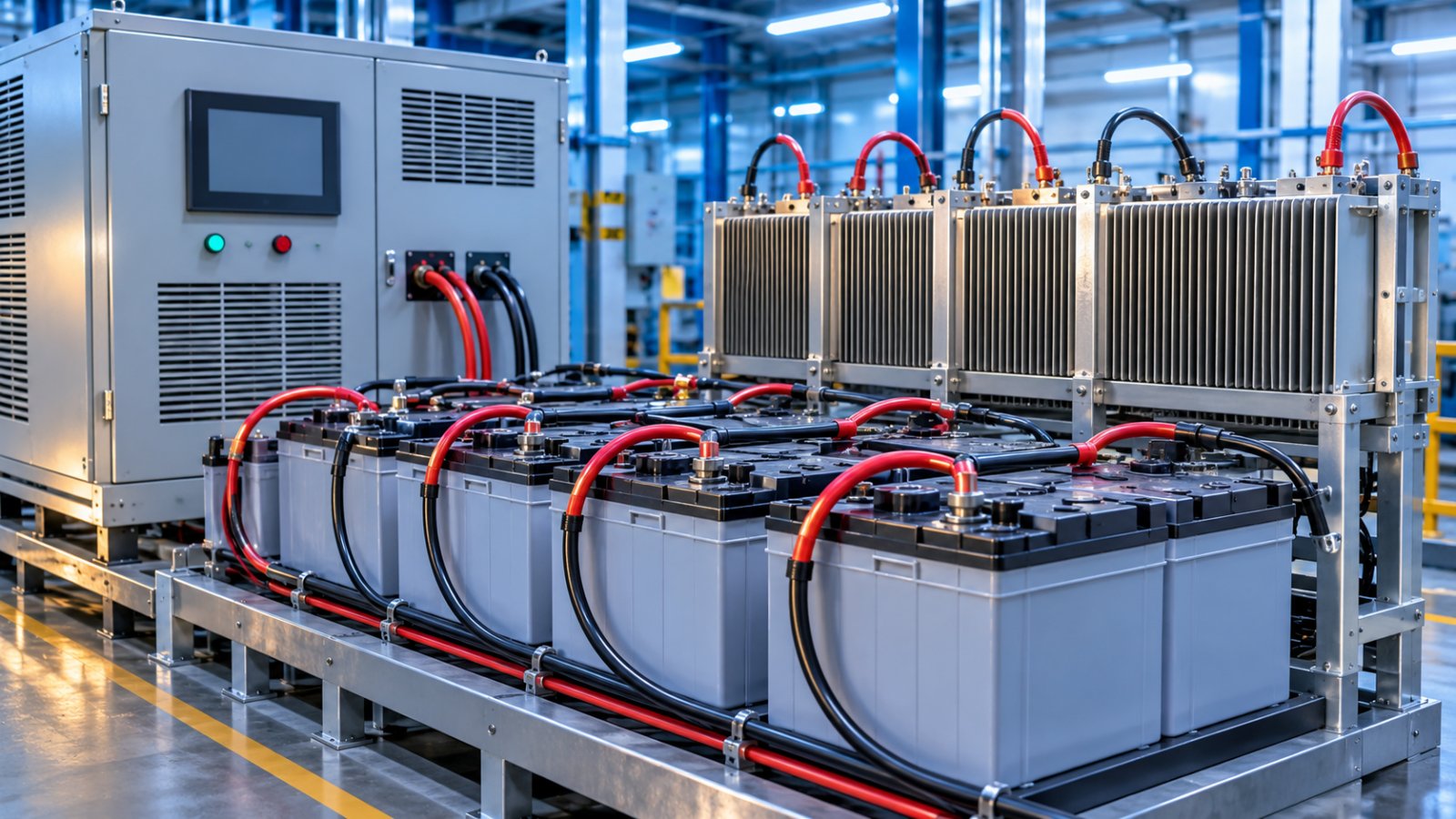
In short: A battery’s capacity is the ampere-hours it can deliver before reaching its cut-off voltage. A rectifier charger converts AC mains to controlled DC and charges in constant-current then constant-voltage stages; a
Battery Charge And Discharge Testing: How A Rectifier Charger Works, Discharging Through A Load And Measuring Capacity With An Ah Meter
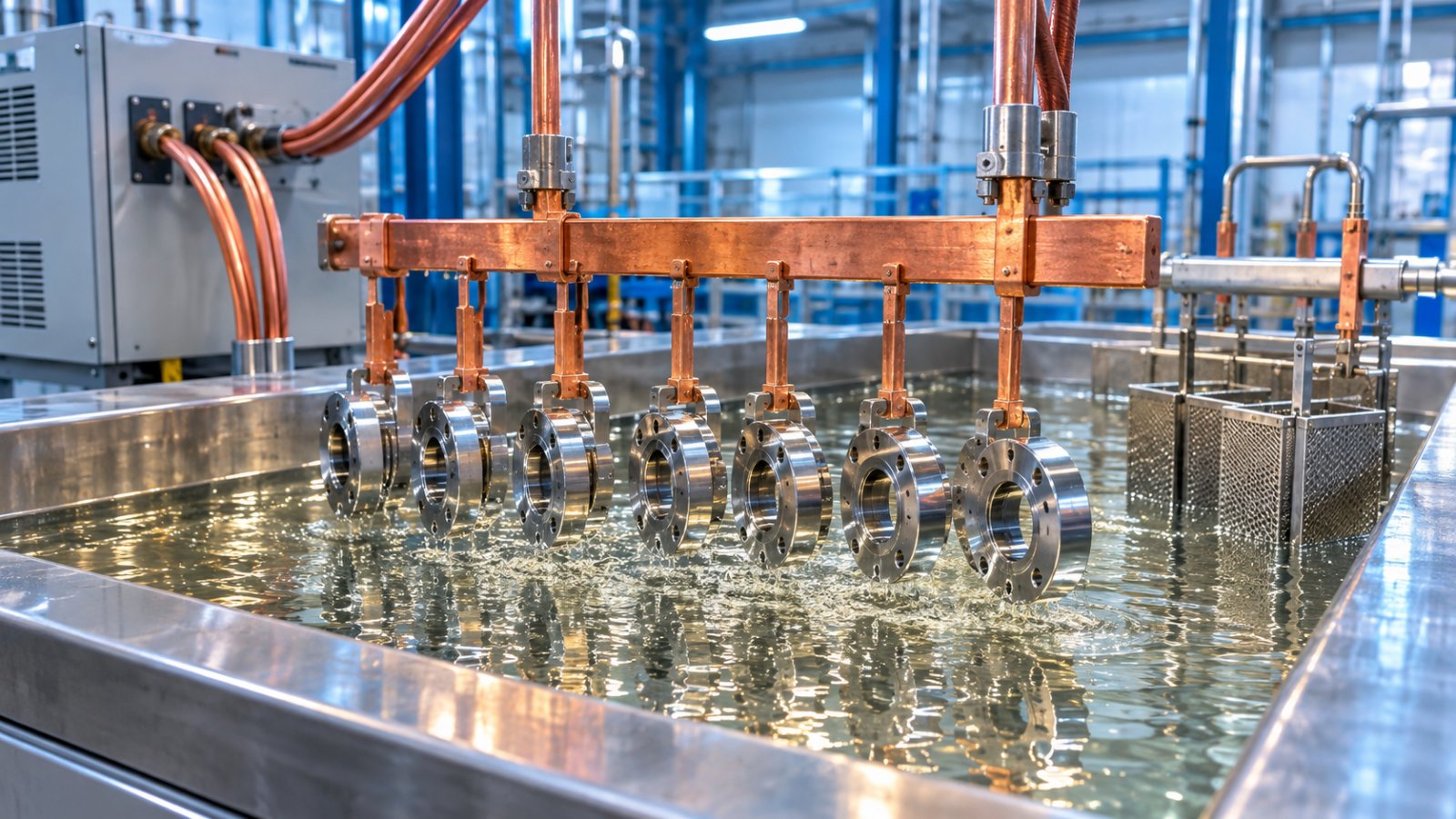
In short: In electroplating, metal is deposited on the part in direct proportion to the electric charge passed — ampere-hours (Ah). At 100 % efficiency, 1 Ah per dm² deposits about 12.3 µm
Precision Electroplating With An Ampere-Hour Meter: How Plating Works, Faraday’s Law And Why Charge Control Beats A Timer
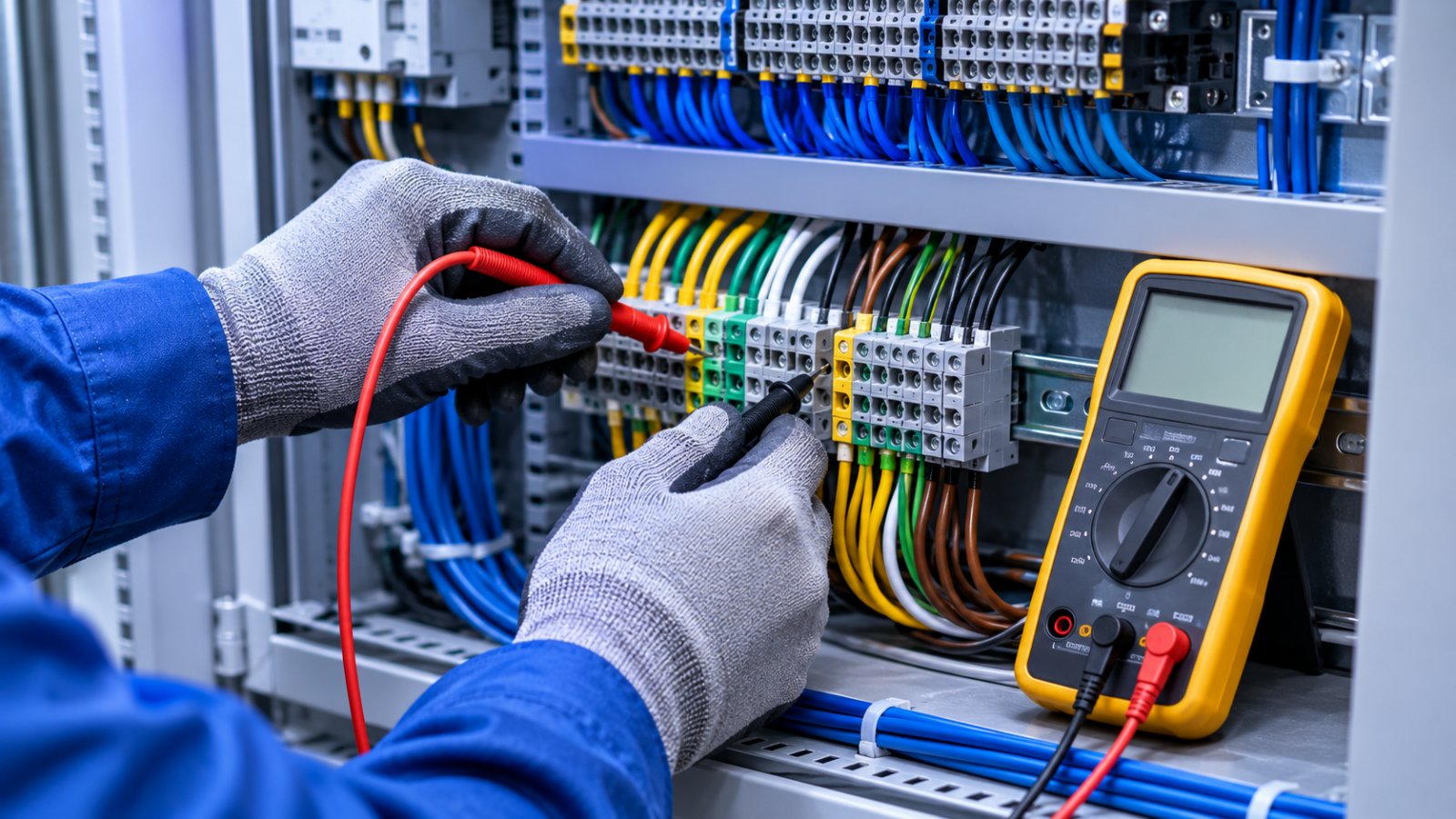
In short: Most thermocouple faults are wiring, not the sensor. Check in this order: right type selected in the instrument → polarity at every joint → same-type extension cable (no copper) → connections
Thermocouple Troubleshooting: Wrong Readings, Reversed Wires, Noise, Drift And Open Circuits