

Countronics
Categories: Humidity Controller
📘 Part of the Temperature Measurement Knowledge Hub — guides on thermocouples, PT100, controllers and data logging.
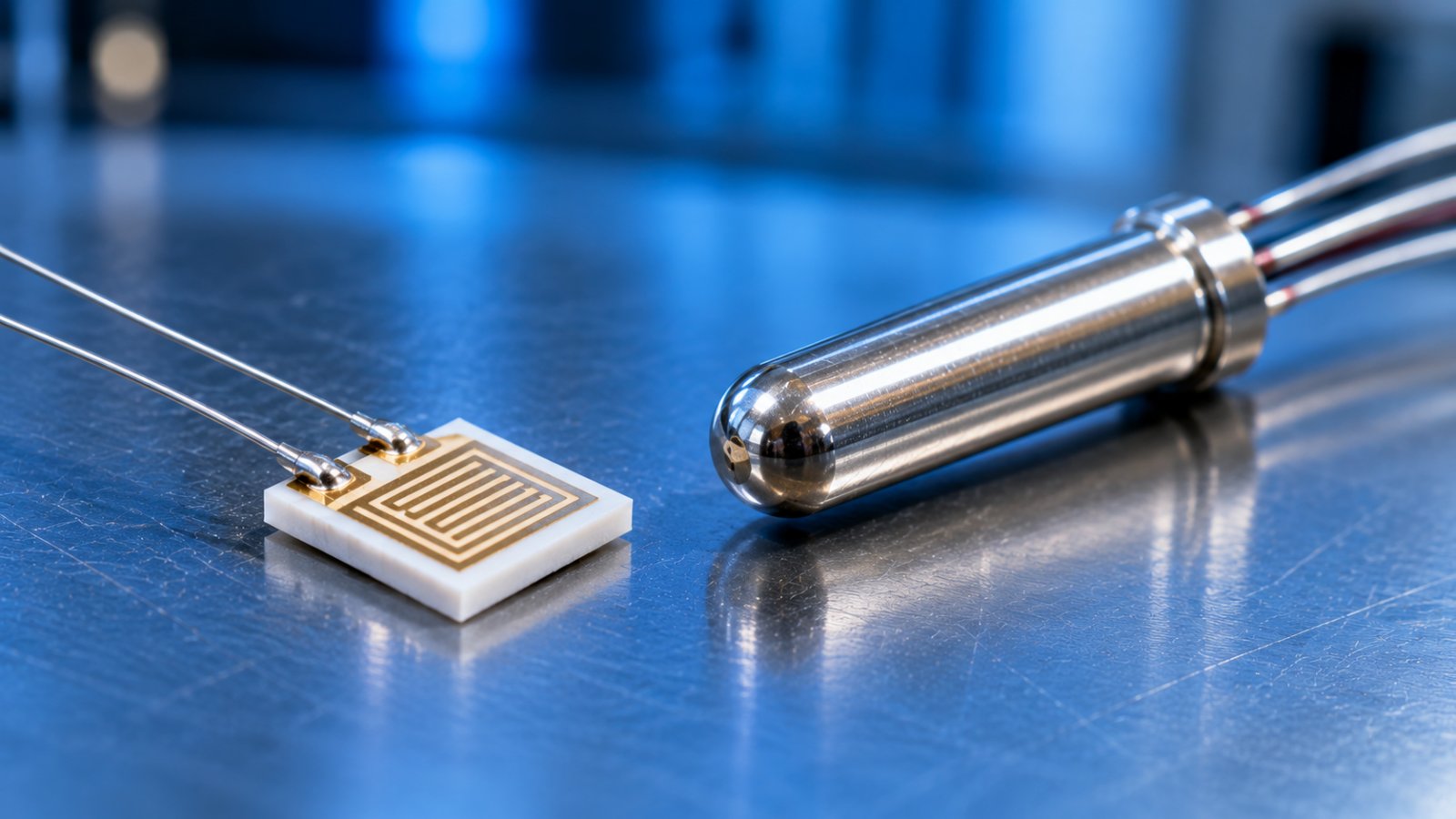
The electrical resistance of platinum rises predictably with temperature. An RTD (resistance temperature detector) is a fine platinum wire coil or a thin platinum film on a ceramic chip. “PT100” means 100 Ω at 0 °C; a PT1000 is 1000 Ω at 0 °C and is less affected by lead resistance.
| Temperature | PT100 resistance (IEC 60751, α = 0.00385) |
|---|---|
| −100 °C | about 60.26 Ω |
| 0 °C | 100.00 Ω |
| 100 °C | 138.51 Ω |
| 200 °C | 175.86 Ω |
| 400 °C | 247.09 Ω |
| 600 °C | 313.71 Ω |
The relationship is described by the Callendar–Van Dusen equation; instruments use it to linearise the reading.
Every metre of copper lead adds resistance. Because 0.385 Ω equals 1 °C, just 1 Ω of extra lead resistance causes an error of about 2.6 °C.
| Connection | How it works | Typical use |
|---|---|---|
| 2-wire | Lead resistance adds directly to the reading | Short leads only, or PT1000 |
| 3-wire | Instrument measures one lead and subtracts it, assuming all leads are equal | Most industrial installations |
| 4-wire | Separate current and sense wires; lead resistance is eliminated | Laboratory, calibration, highest accuracy |
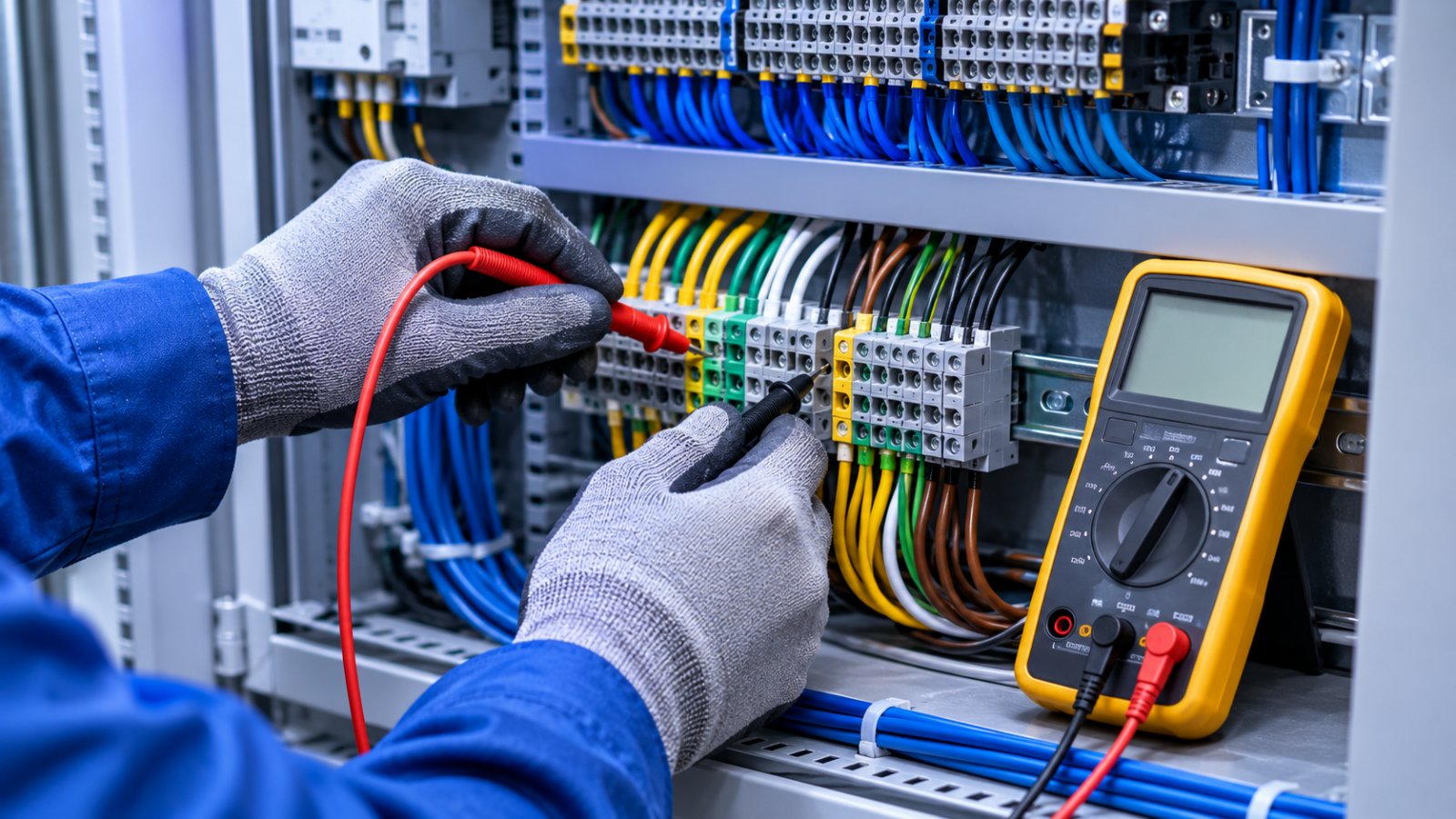
For a 3-wire connection, all three cores must be the same size and length — mismatched leads leave an error. Countronics instruments use 3-wire PT100 inputs, e.g. temperature controllers and multi-channel loggers.
| Class | Tolerance | At 0 °C | At 100 °C |
|---|---|---|---|
| AA (1/3 DIN) | ±(0.10 + 0.0017|t|) °C | ±0.10 °C | ±0.27 °C |
| A | ±(0.15 + 0.002|t|) °C | ±0.15 °C | ±0.35 °C |
| B | ±(0.30 + 0.005|t|) °C | ±0.30 °C | ±0.80 °C |
The measuring current warms the sensor slightly. Instruments use about 1 mA or less to keep this small; the effect is larger in still air than in moving liquid.
Choose PT100 for accuracy and stability up to about 400–600 °C; thermocouples for higher temperatures, faster response and rugged, low-cost sensing. Full comparison: PT100 vs thermocouple.
100 Ω. It rises by about 0.385 Ω per °C, reaching 138.5 Ω at 100 °C.
3-wire cancels lead resistance if all leads are equal; 4-wire eliminates lead resistance completely using separate current and sense wires.
±(0.15 + 0.002|t|) °C — for example ±0.35 °C at 100 °C.
Yes, with 3-wire or 4-wire connection, or by using a transmitter near the sensor sending 4–20 mA.
PT100 is more accurate and stable up to about 400–600 °C; thermocouples cover higher temperatures and respond faster.
Countronics controllers, indicators and data loggers accept 3-wire PT100. Tell us your range and accuracy needs.
By Countronics
By Countronics

By Countronics
© 2026 - countronics.com
WhatsApp us