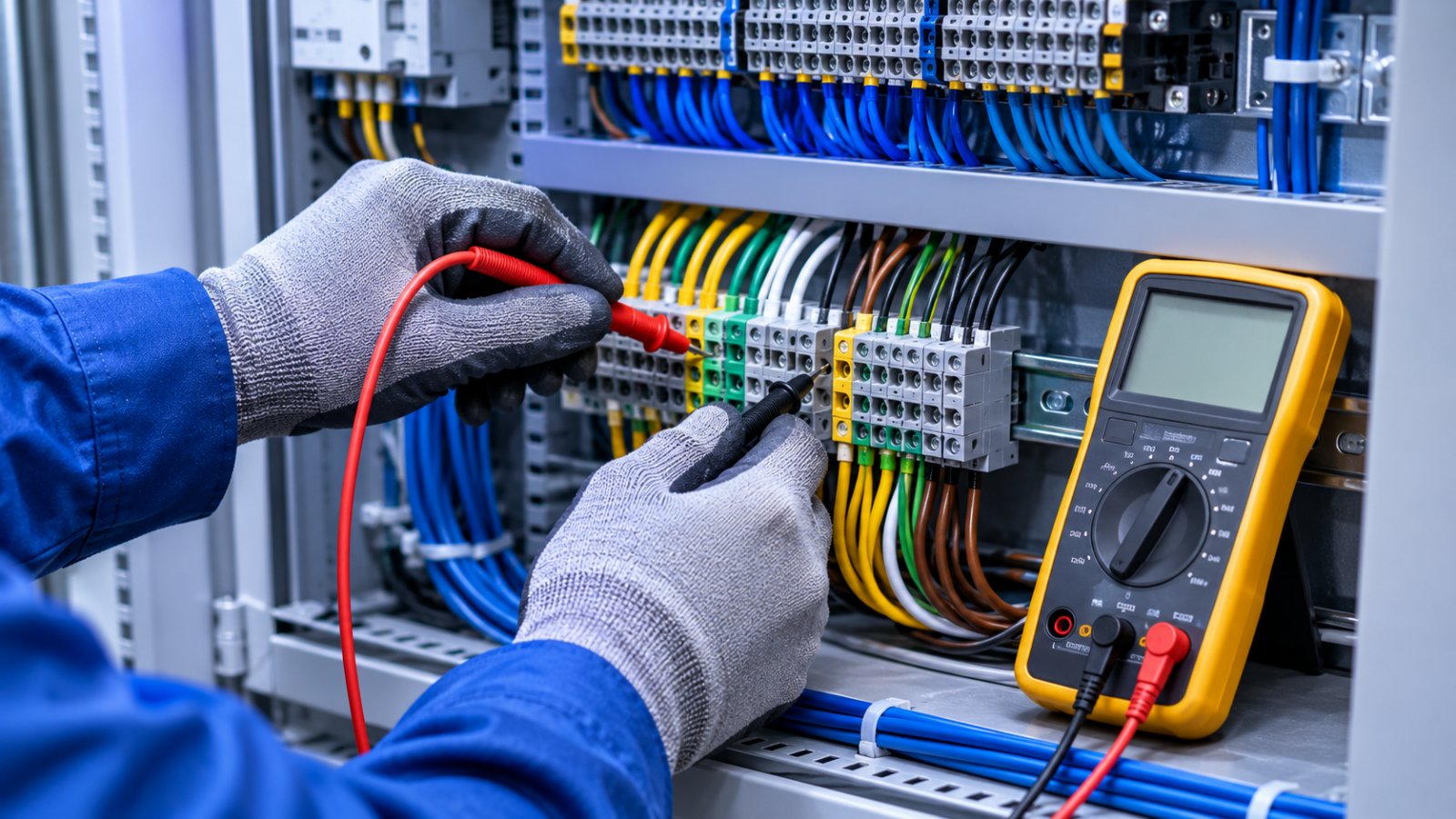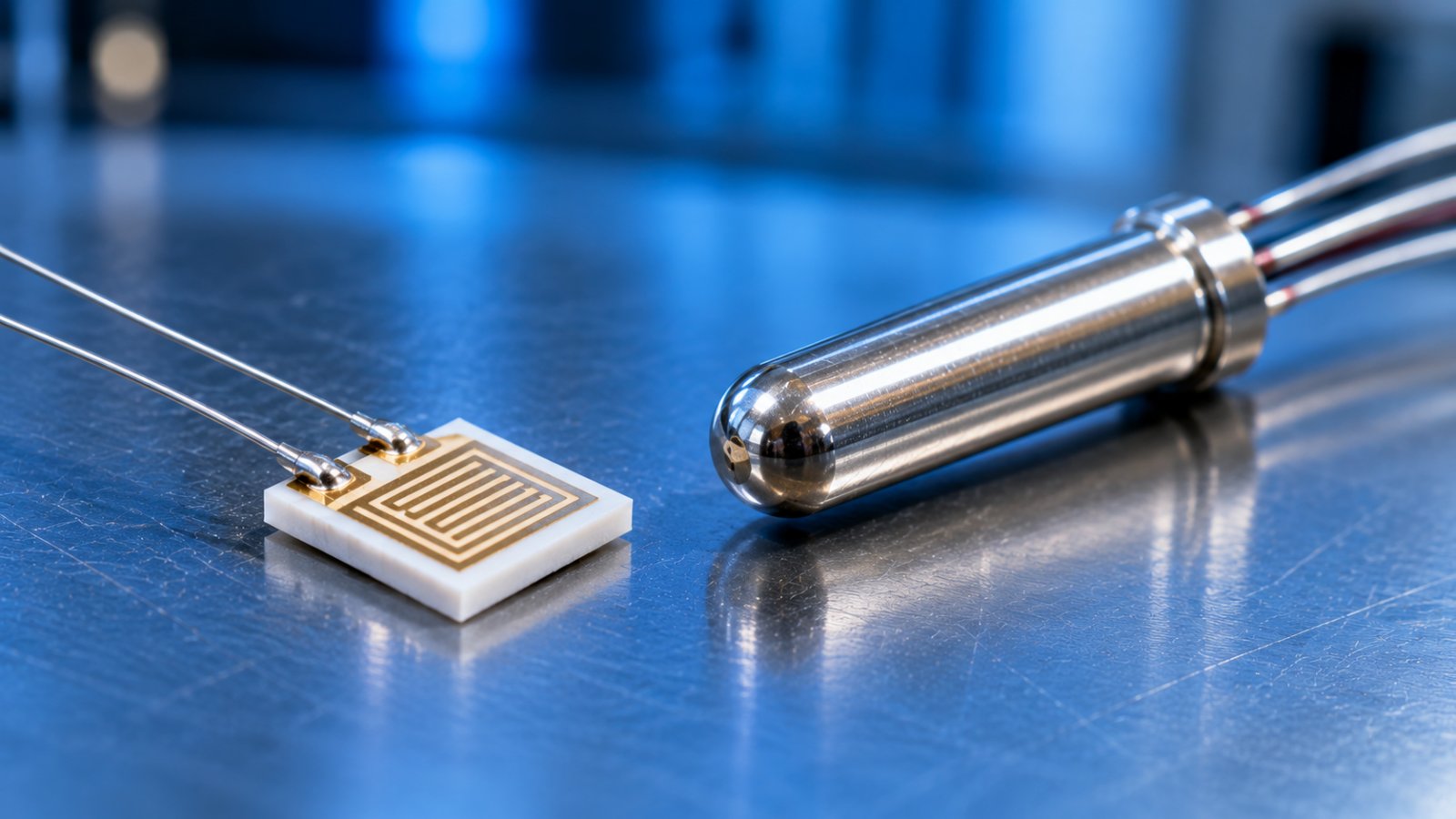

Thermowell with sensor head on an insulated process pipe

Thermowell Guide: When You Need One, Insertion Length, Response Time And Materials

In short: A thermowell is a closed tube welded or screwed into a pipe or vessel so the temperature sensor can be removed without draining or depressurising the process. It protects the sensor from pressure, flow and corrosion, but slows response. Immerse it deep enough — a common rule is at least 10 × the well’s tip diameter into the fluid — and check high-velocity applications for vibration (wake frequency) failure.

📘 Part of the Temperature Measurement Knowledge Hub — guides on thermocouples, PT100, controllers and data logging.

When Do You Need a Thermowell?

  • Pressurised pipes and vessels
  • Fast-flowing or abrasive fluids
  • Corrosive liquids
  • Where the sensor must be replaced while the plant runs
  • Hygienic processes that must stay sealed

You may not need one in ovens, furnaces with ceramic sheaths, air ducts or open tanks, where a sheathed probe can be inserted directly.

Insertion Length

Heat flows along the well and sensor stem to the cooler outside — stem conduction — so a shallow well reads closer to ambient. Practical rules:

  • Immerse at least about 10 times the tip diameter into the fluid (more for gases).
  • In pipes, aim for the tip in the centre third of the pipe where possible.
  • Insulate the well head and pipe on high- or low-temperature lines.
  • The sensor must touch the bottom of the bore — use spring-loaded sensors.

Response Time

A thermowell adds mass and an air gap between the well and sensor, often making response several times slower. To speed it up: choose a tapered well with a thin tip, use the smallest bore that fits the sensor, and fill the gap with heat-transfer paste where temperature allows.

Styles and Materials

StyleTypical use
ThreadedGeneral process piping, lower pressures
FlangedHigher pressures, corrosive service, easy removal
Weld-in / socket-weldHigh pressure and temperature
Sanitary (tri-clamp)Food, dairy, pharma
MaterialNotes
316/316L stainless steelMost common, good corrosion resistance
304 stainless steelGeneral use
Inconel / HastelloyHigh temperature or aggressive chemicals
Coated or PTFE-linedStrong acids

Vibration and Failure

Fluid flowing past a well sheds vortices. If the vortex shedding frequency approaches the well’s natural frequency, the well can crack and break off. For high velocities (steam, gas, fast liquid lines), the well should be checked by a wake-frequency calculation to ASME PTC 19.3 TW; shorter, stiffer, tapered wells are safer.

Inside the well use a sheathed thermocouple or PT100 — see thermocouple probe types and how a PT100 works.

Mistakes to Avoid

  1. Well too short — reading biased towards ambient.
  2. Sensor not touching the bottom of the well.
  3. Long thin well in high-velocity steam without a wake-frequency check.
  4. Uninsulated well head on hot or cold lines.

Quick Checklist

  • Well needed?
  • Insertion depth ≥ 10× tip diameter
  • Material suits fluid
  • Bore matches sensor
  • Wake-frequency check for fast flows

Frequently Asked Questions

What is a thermowell used for?

It protects a temperature sensor from process pressure, flow and corrosion, and lets the sensor be removed without stopping the process.

How deep should a thermowell be inserted?

A common rule is at least 10 times the tip diameter into the fluid, with the tip ideally in the centre third of the pipe.

Does a thermowell slow down response?

Yes, often by several times. Tapered wells, close-fitting bores and heat-transfer paste help.

Why do thermowells break?

High fluid velocity can cause vortex-induced vibration near the well’s natural frequency. Wake-frequency calculations prevent this.

What material are thermowells made of?

Usually 316 stainless steel; Inconel, Hastelloy or lined wells for high temperature or corrosive service.

Need Instruments for Process Temperature?

Countronics temperature controllers and indicators work with thermocouple and PT100 sensors in thermowells. Tell us your process.


In short: Most thermocouple faults are wiring, not the sensor. Check in this order: right type selected in the instrument → polarity at every joint → same-type extension cable (no copper) → connections
Thermocouple Troubleshooting: Wrong Readings, Reversed Wires, Noise, Drift And Open Circuits
In short: A thermowell is a closed tube welded or screwed into a pipe or vessel so the temperature sensor can be removed without draining or depressurising the process. It protects the sensor
Thermowell Guide: When You Need One, Insertion Length, Response Time And Materials
In short: A PT100 is a platinum resistor that measures 100 Ω at 0 °C and rises by about 0.385 Ω per °C (138.5 Ω at 100 °C). The instrument passes a small
How Does A PT100 (RTD) Work? Resistance vs Temperature, 2-, 3- And 4-Wire Connections And Class A vs B