

Countronics
Categories: Conductivity Meter
💧 Part of the Water Quality Measurement Hub — guides on pH, ORP, conductivity and TDS.
| Parameter | Tells you | Typical use |
|---|---|---|
| pH | Acidity/alkalinity — corrosion, scaling, reaction control | Neutralisation, boiler and cooling chemistry, plating |
| ORP (mV) | Oxidising or reducing strength | Disinfection, cyanide/chrome treatment, RO chlorine protection |
| Conductivity / TDS | Total dissolved salts | RO/DM purity, blowdown, rinse quality |
| Temperature | Compensation and process condition | All of the above |
Overview of each parameter: pH, ORP, conductivity, TDS and temperature explained.
| Application | Measure | Typical target / limit | Why |
|---|---|---|---|
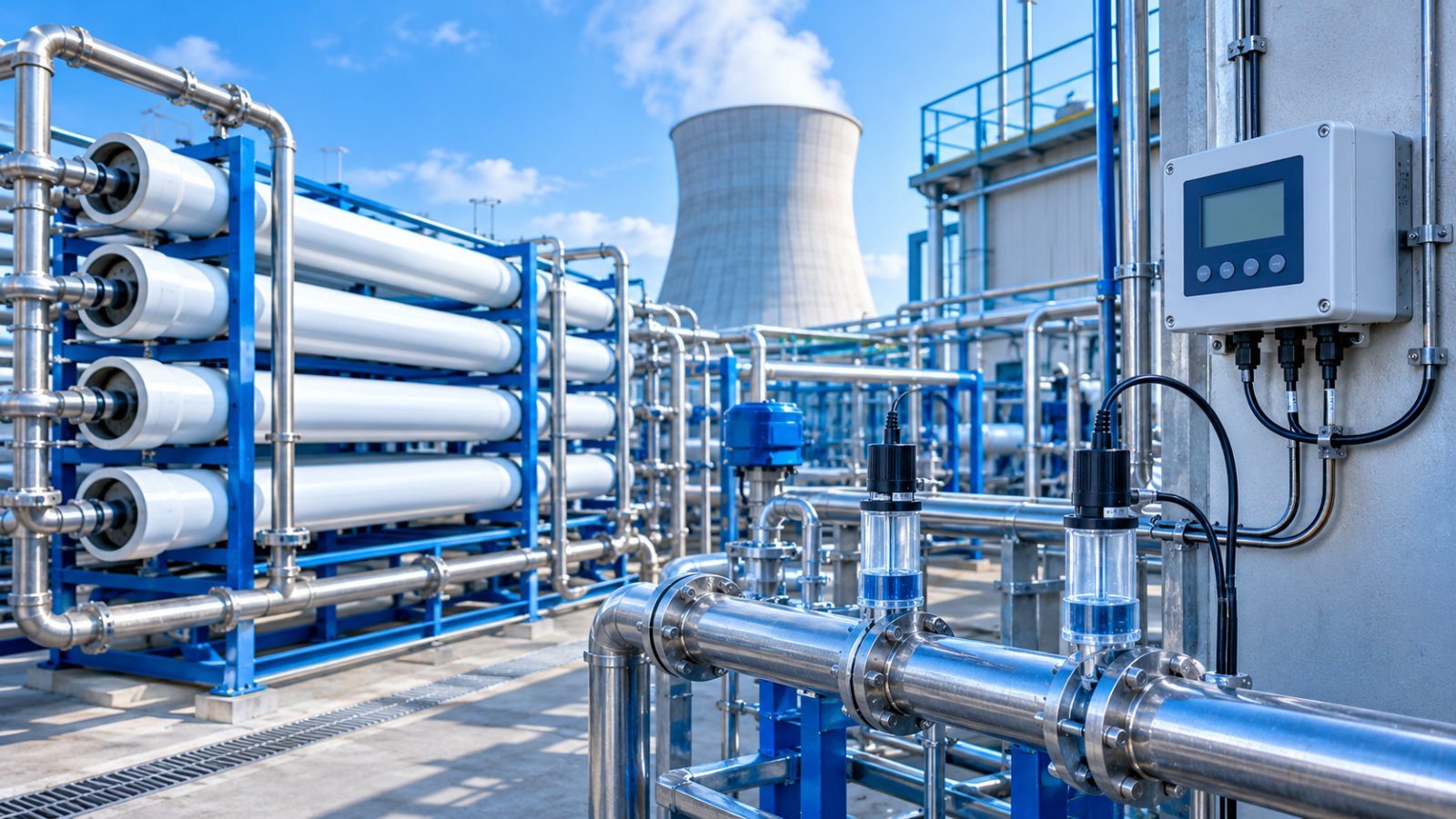
| RO plant | Feed and permeate conductivity; feed ORP; feed pH | Rejection often 95–99 %; low ORP before membranes | Membrane health, chlorine protection, scaling |
| DM / pharma purified water | Conductivity or resistivity | Often below about 1.3 µS/cm at 25 °C for purified water | Purity specification |
| Boiler feed | pH; conductivity | pH often about 8.5–9.5 (per treatment supplier) | Corrosion and carry-over control |
| Cooling tower | Conductivity (blowdown); pH; ORP | Conductivity set by cycles of concentration; pH about 7–9 | Scaling, corrosion, biocide control |
| ETP / STP discharge | pH (and flow, COD lab tests) | pH 6.5–8.5 is a common discharge limit | Regulatory compliance |
| Plating rinse tanks | Conductivity | Set by rinse quality needed | Saves water — refill only when dirty |
| Swimming pools | pH; ORP | pH 7.2–7.6; ORP about 650–750 mV | Effective, safe disinfection |
Limits vary by plant, product and local regulation; always use your treatment supplier’s or regulator’s values.
Many plating and metal-finishing lines run rinse water continuously. A conductivity controller on the rinse tank opens the make-up valve only when conductivity rises above a set point, often cutting rinse water use substantially while keeping rinse quality consistent.
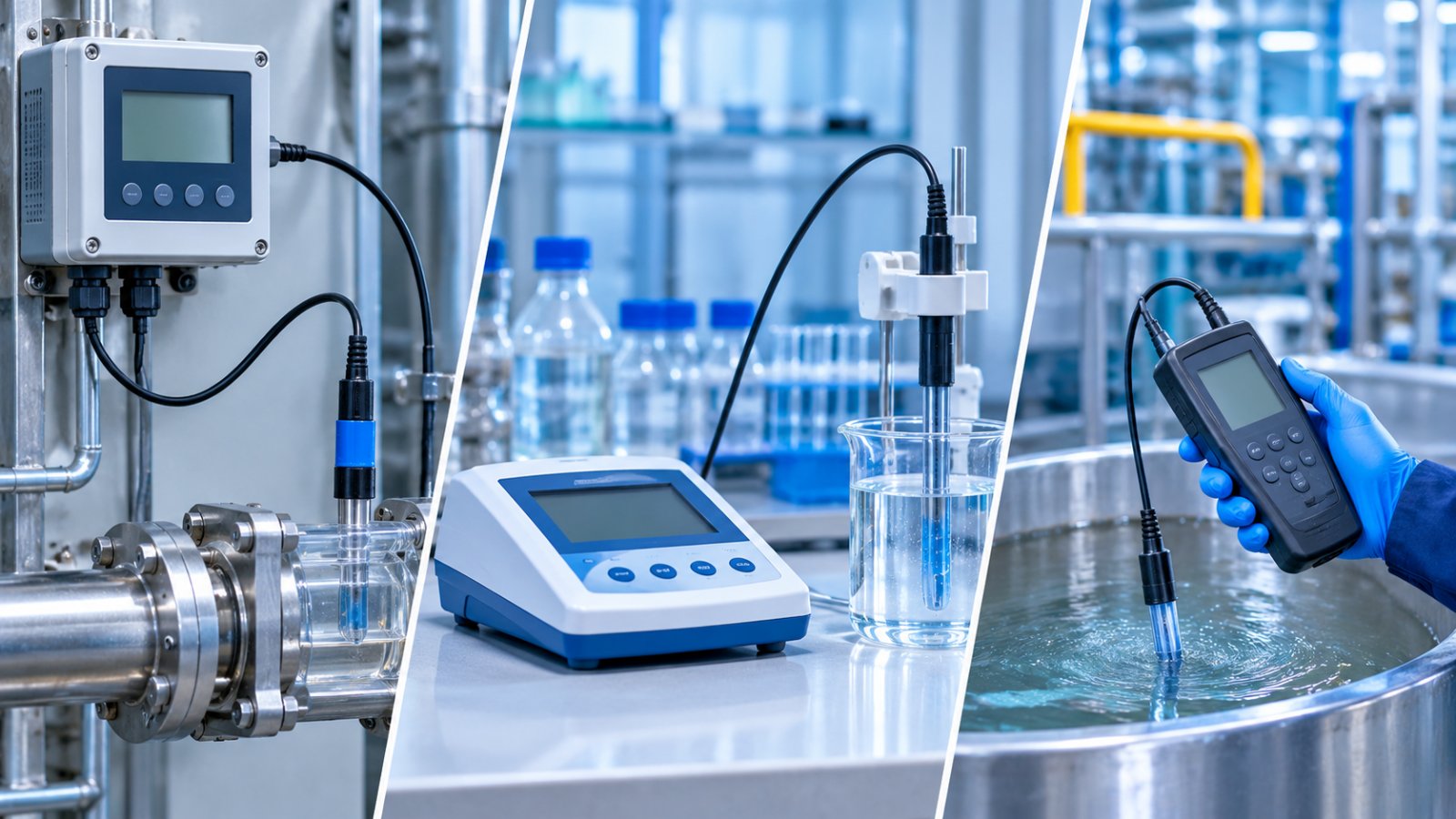
Use online instruments for anything that must be controlled or recorded continuously, and a bench meter to verify them — see online vs portable vs bench-top pH meters. For units and conversions see conductivity, resistivity and TDS units.
Typical Countronics instruments by monitoring point:
All models: 220 V AC standard; 110 V AC / 60 Hz, 12 V DC or 24 V DC on request. Test certificates traceable to national laboratories available.
Related: RO plant monitoring, pH in boiler and cooling water, ORP in cooling towers, pH control in effluent treatment.
Usually pH, ORP, conductivity or TDS, and temperature, chosen by application.
Feed and permeate conductivity (for salt rejection), feed ORP or chlorine (to protect membranes) and feed pH (to control scaling).
By conductivity: a controller opens the blowdown valve when conductivity rises above the set point.
A common limit is about 6.5 to 8.5, but check your local pollution control board’s consent conditions.
Yes — refilling rinse tanks only when conductivity rises can cut water use while keeping rinse quality steady.
Countronics makes pH and ORP and conductivity and TDS controllers, indicators and bench meters. Tell us your application and we will suggest monitoring points and instruments.
By Countronics
By Countronics
By Countronics
© 2026 - countronics.com
WhatsApp us