
16 Channel Data Logger (Data Acquisition Systems) with Direct USB Pen Drive 1 – Countronics

Blood Bank Refrigerator Temperature Monitoring: Storage Ranges, Alarms And Temperature Records

In short: Red cells and whole blood are commonly stored at 2–6 °C, platelets at 20–24 °C with gentle agitation, and plasma frozen at -18 °C or colder (often -25 °C or below). Each unit needs a continuous temperature record, audible alarms before limits are reached, and a probe that represents product temperature, not air near the door. Always follow your national blood transfusion guidelines.

Typical Storage Temperatures

ComponentTypical storageEquipment
Whole blood / red cells2–6 °CBlood bank refrigerator
Platelets20–24 °C with agitationPlatelet incubator + agitator
Fresh frozen plasma-18 °C or colder (often ≤ -25 °C)Plasma freezer
ReagentsAs per manufacturer, often 2–8 °CPharmacy refrigerator

Exact limits come from the national guidelines and the blood bank’s own procedures; the table shows commonly used values.

Why the Built-In Display Is Not Enough

A refrigerator’s own thermostat shows air temperature at one point and usually keeps no record. Auditors expect a continuous record for every unit, and staff need to be warned before blood goes out of range — not after.

Alarm Settings That Work

  • Set alarms inside the storage limits, for example 2.5 °C and 5.5 °C for a 2–6 °C refrigerator, so staff have time to act.
  • Add a short delay so a normal door opening does not trigger an alarm.
  • Use both a local buzzer and a remote alarm contact for night shifts.
  • Test alarms regularly and record the test.

Probe Placement

Air temperature changes quickly when the door opens; blood bags change slowly. Many blood banks place the probe in a small bottle of glycerol or water so the reading behaves like product temperature. Place it at the warmest location identified during mapping.

Keeping the Record

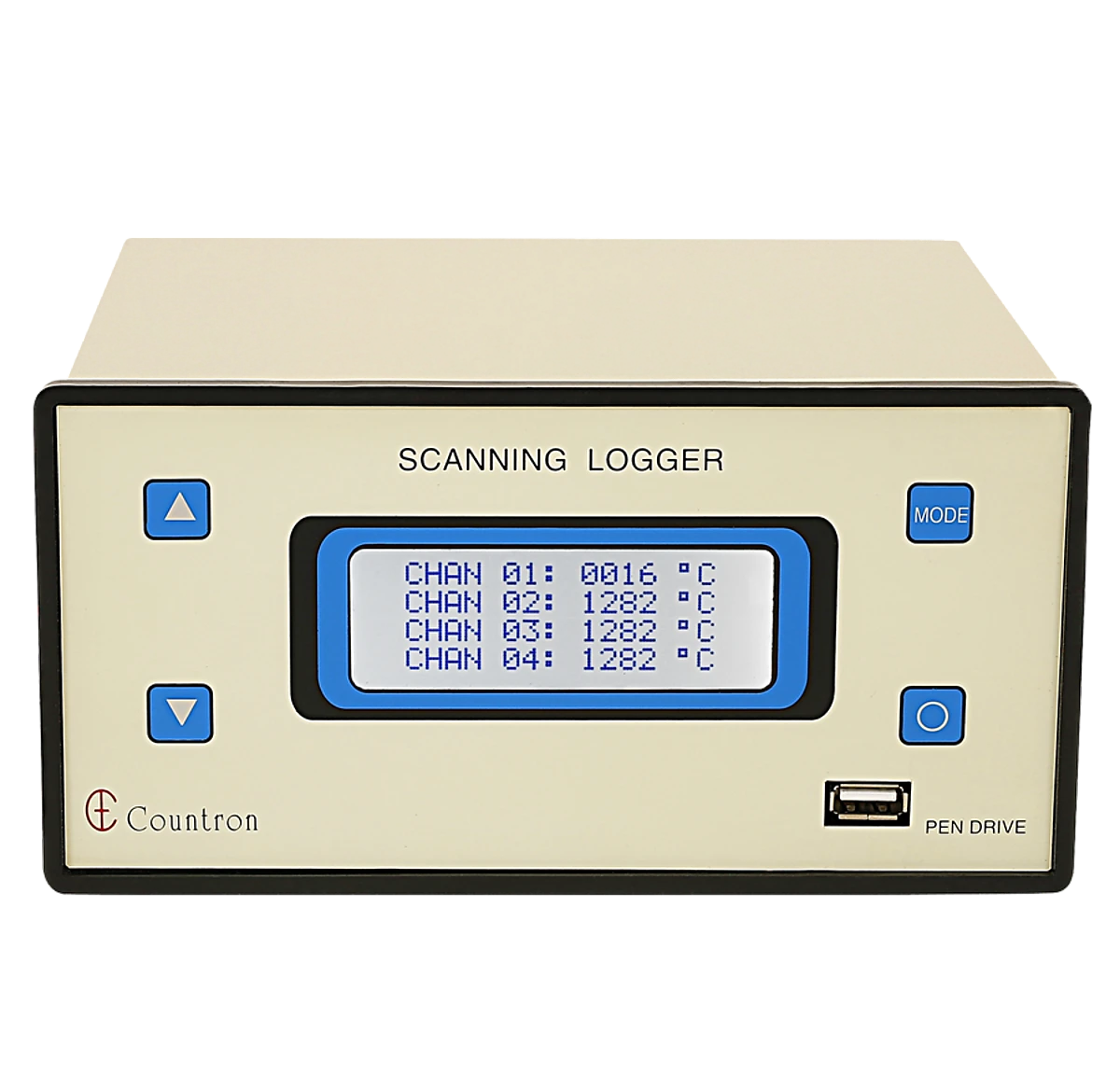
A multi-channel logger can record several refrigerators, freezers and incubators in one file with date and time. The CT708 records up to 8 points to a USB pen drive; the CT716 up to 16. Review and sign the records daily as your procedure requires.

Mistakes to Avoid

  1. Alarm limits set at the storage limits, leaving no reaction time.
  2. Probe hanging in air near the door.
  3. No alarm path at night or weekends.
  4. Records not reviewed until an audit.

Quick Checklist

  • Storage range per unit
  • Alarm limits and delay
  • Remote alarm at night
  • Probe in buffer medium at the warmest point
  • Continuous record reviewed daily
  • Periodic calibration check

Frequently Asked Questions

What temperature should a blood bank refrigerator be kept at?

Whole blood and red cells are commonly stored at 2 to 6 °C. Follow your national blood transfusion guidelines for exact limits.

At what temperature are platelets stored?

Typically 20 to 24 °C with continuous gentle agitation.

Why put the temperature probe in glycerol or water?

It slows the probe’s response so the reading behaves like a blood bag rather than the air, reducing false alarms from door openings.

Where should alarm limits be set?

Inside the storage range, so staff are warned before the product goes out of limits.

Can one logger record several refrigerators?

Yes. A multi-channel logger records each unit on its own channel with a common time stamp.

Monitoring Blood Storage?

Countronics makes multi-channel temperature loggers and temperature indicators with alarms. Tell us how many units you need to monitor.


In short: Most thermocouple faults are wiring, not the sensor. Check in this order: right type selected in the instrument → polarity at every joint → same-type extension cable (no copper) → connections
Thermocouple Troubleshooting: Wrong Readings, Reversed Wires, Noise, Drift And Open Circuits
In short: A thermowell is a closed tube welded or screwed into a pipe or vessel so the temperature sensor can be removed without draining or depressurising the process. It protects the sensor
Thermowell Guide: When You Need One, Insertion Length, Response Time And Materials
In short: A PT100 is a platinum resistor that measures 100 Ω at 0 °C and rises by about 0.385 Ω per °C (138.5 Ω at 100 °C). The instrument passes a small
How Does A PT100 (RTD) Work? Resistance vs Temperature, 2-, 3- And 4-Wire Connections And Class A vs B