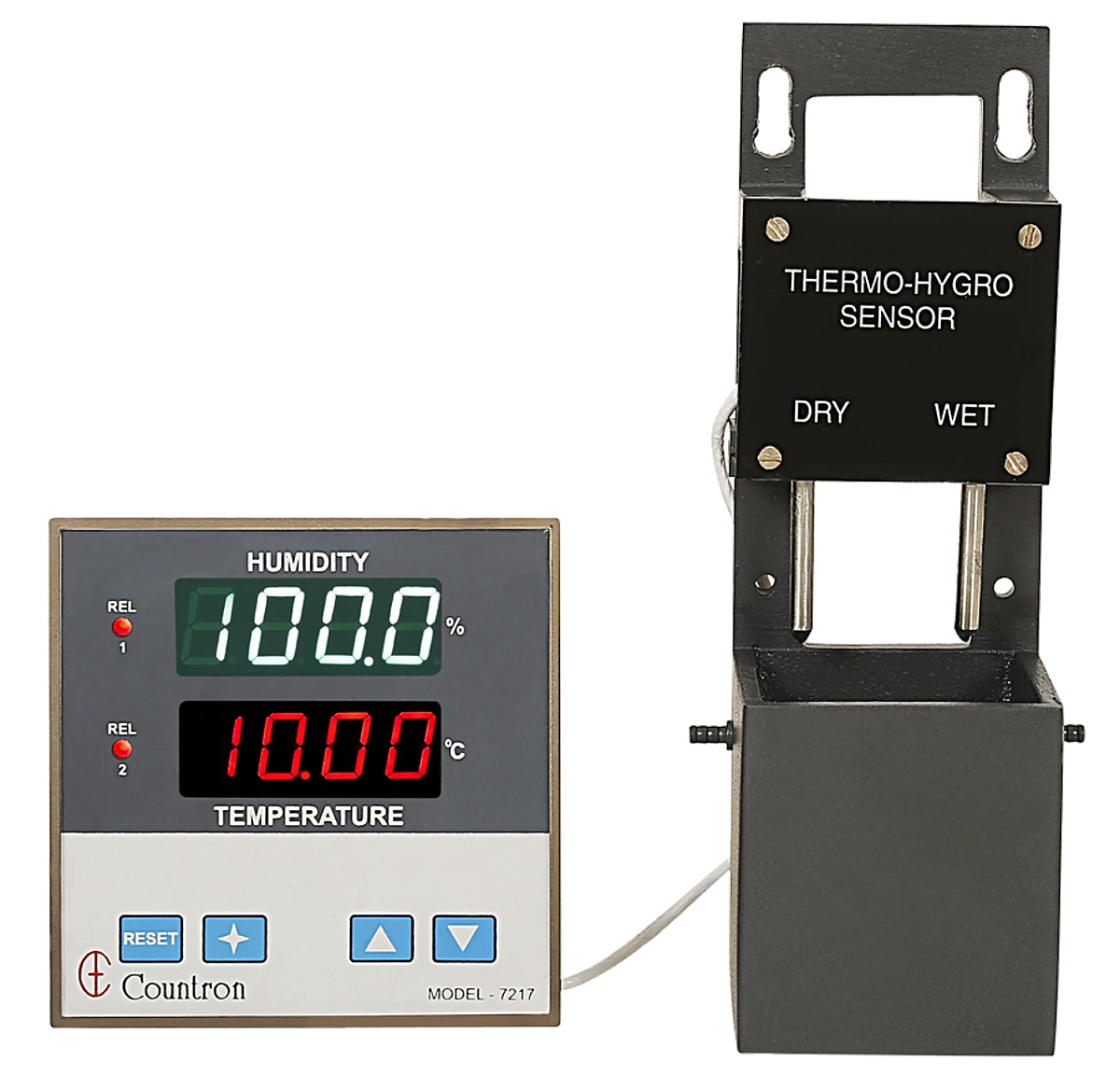

Humidity Temperature Controller Model 7217 1 – Countronics

Mushroom And Greenhouse Humidity Control: RH Targets, Misting, Ventilation And Disease Risk

In short: Mushroom fruiting rooms run very humid — commonly around 80–95 %RH — while most greenhouse crops prefer a moderate band with good air movement. Use a controller with separate humidify and ventilate outputs, place sensors at crop level away from misting nozzles, and protect the sensor from direct water spray.

Mushroom Growing Rooms

Mushrooms need high humidity so caps do not dry and crack, but also fresh air to control CO₂. Fruiting rooms are commonly kept around 80–95 %RH depending on species and stage. Misting or foggers add moisture; ventilation removes CO₂ and excess humidity. Spawn suppliers give stage-by-stage targets.

Greenhouses and Polyhouses

ConditionRisk
Too humid, still airFungal diseases, leaf wetness, poor pollination
Too dry, hotPlant stress, wilting, spider mites
Condensation at nightWater drips on leaves, disease spread

Growers often think in terms of vapour pressure deficit (VPD), which combines RH and temperature. Measuring both accurately is the starting point.

Controller Setup

  • Humidify relay for misters or foggers
  • Dehumidify/ventilate relay for fans or vents
  • Hysteresis wide enough to avoid rapid cycling
  • Minimum on/off times to protect pumps and fans
  • High and low RH alarms

The 7217 humidity and temperature controller provides relay outputs for this kind of control.

Sensor Placement in Wet Rooms

  • At crop height, in moving air
  • Away from nozzles and direct spray
  • Shielded from sun in greenhouses
  • Cleaned regularly — dirty filters read wrongly

Mistakes to Avoid

  1. Sensor wetted by misting, reading 100 % constantly.
  2. Ventilation and misting fighting each other.
  3. No night-time condensation control.
  4. Sensor in direct sun.

Quick Checklist

  • RH targets per stage
  • Humidify and ventilate outputs
  • Sensor protected from spray
  • Alarms set
  • Log kept

Frequently Asked Questions

What humidity do mushrooms need?

Fruiting rooms are commonly kept around 80 to 95 %RH, depending on species and growth stage.

Why does high humidity cause greenhouse disease?

Humid, still air keeps leaves wet, which favours fungal diseases.

Where should a humidity sensor go in a greenhouse?

At crop height, in moving air, shaded from direct sun and away from misting nozzles.

Can one controller handle misting and ventilation?

Yes, with separate relay outputs for humidify and dehumidify or ventilate.

Why does my humidity sensor read 100 % all the time?

It is probably wet from misting or condensation. Move or shield it.

Controlling a Grow Room?

Countronics makes humidity controllers with separate humidify and ventilate relays. Tell us your room size and crop.


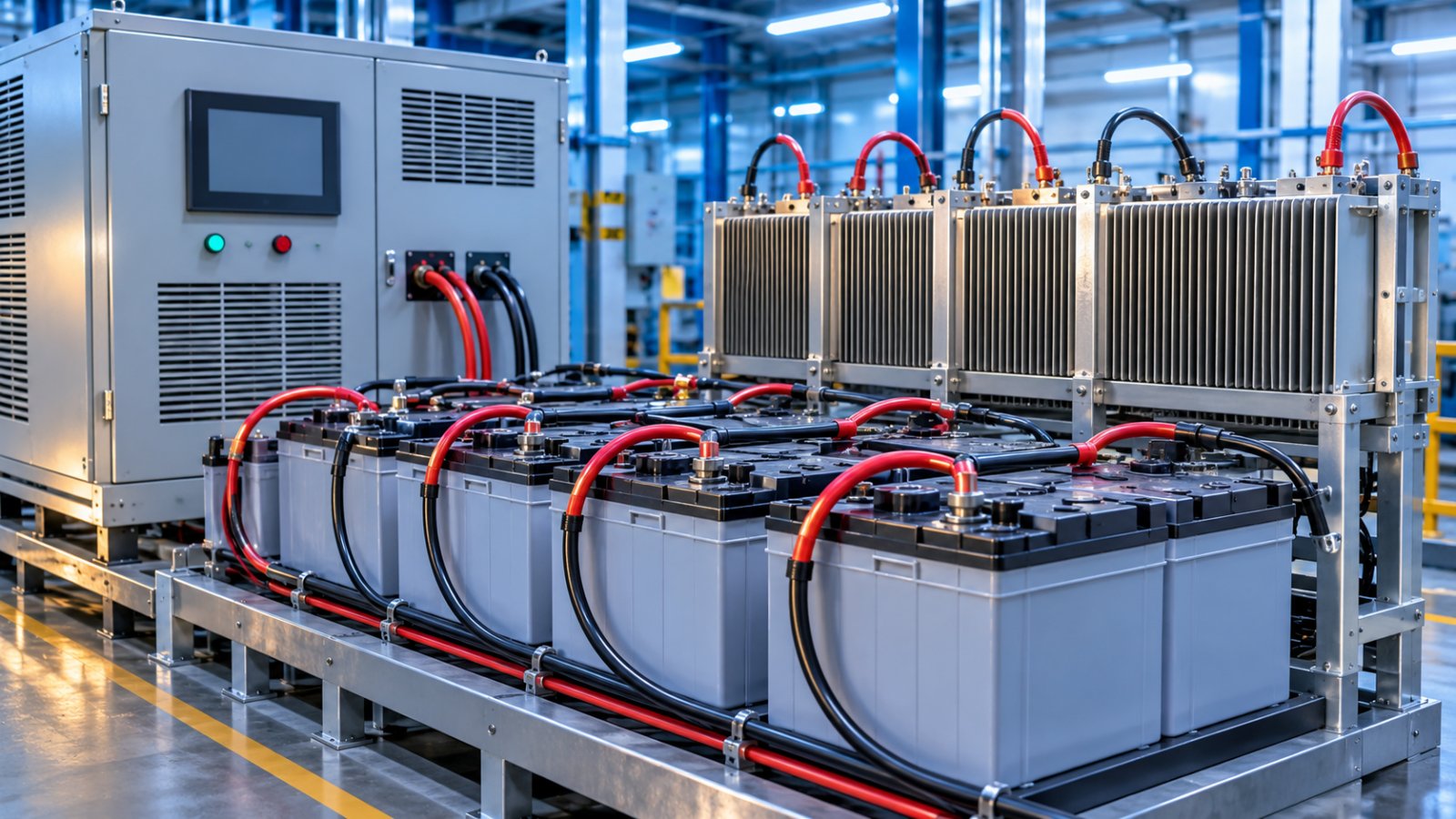
In short: A battery’s capacity is the ampere-hours it can deliver before reaching its cut-off voltage. A rectifier charger converts AC mains to controlled DC and charges in constant-current then constant-voltage stages; a
Battery Charge And Discharge Testing: How A Rectifier Charger Works, Discharging Through A Load And Measuring Capacity With An Ah Meter
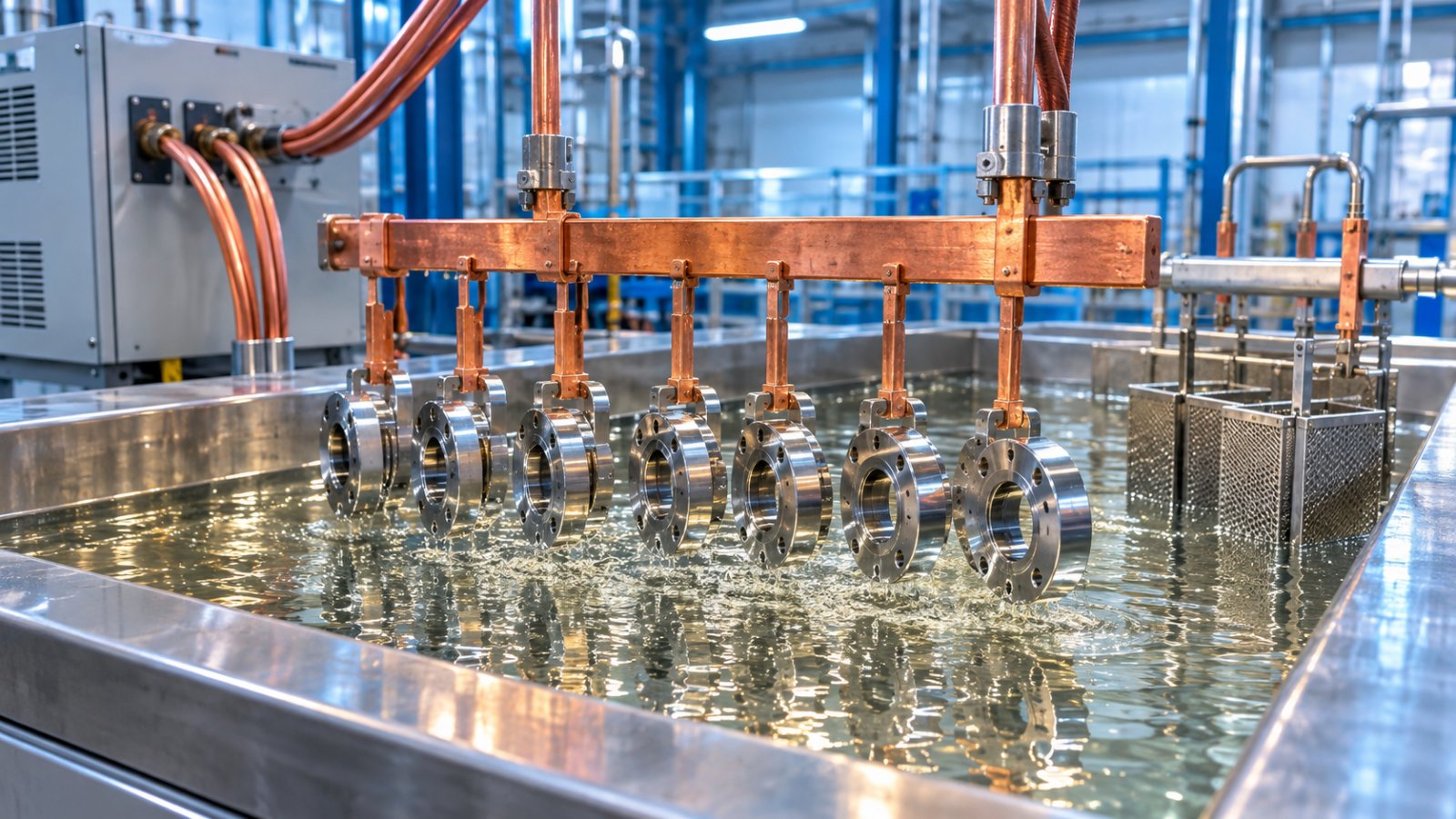
In short: In electroplating, metal is deposited on the part in direct proportion to the electric charge passed — ampere-hours (Ah). At 100 % efficiency, 1 Ah per dm² deposits about 12.3 µm
Precision Electroplating With An Ampere-Hour Meter: How Plating Works, Faraday’s Law And Why Charge Control Beats A Timer
In short: Most thermocouple faults are wiring, not the sensor. Check in this order: right type selected in the instrument → polarity at every joint → same-type extension cable (no copper) → connections
Thermocouple Troubleshooting: Wrong Readings, Reversed Wires, Noise, Drift And Open Circuits