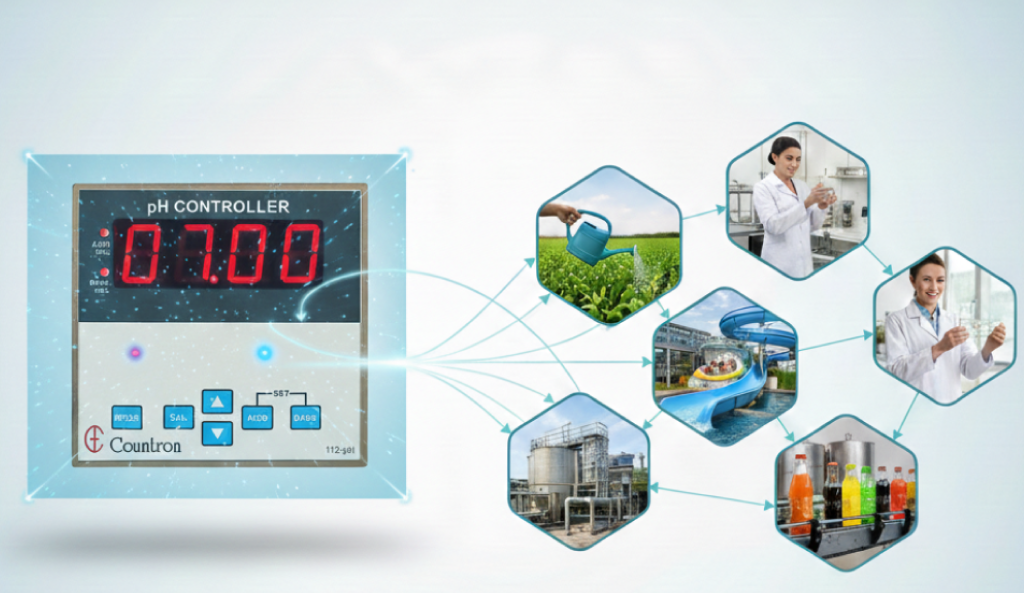

With no soil to buffer it, nutrient solution pH can move quickly. If it rises above about 6.5, iron and manganese become less available and leaves yellow; if it falls too low, calcium and magnesium uptake suffers and roots can be damaged.
| System / crop | Typical pH |
|---|---|
| Leafy greens (lettuce, spinach) | 5.5–6.5 |
| Tomato, cucumber, capsicum | 5.5–6.5 |
| Strawberry | 5.5–6.2 |
| Drip fertigation in soil | Often 5.8–6.5, depending on soil |
Seed and nutrient suppliers often give crop-specific targets; use them where available.
EC shows how much fertiliser is dissolved. As plants drink, EC rises; as they feed, it falls. Watching pH and EC together tells you whether to add water, nutrients or acid. See conductivity vs TDS.
For most crops, about 5.5 to 6.5. Some crops prefer the lower end of this range.
Plant nutrient uptake, especially of nitrate, tends to push pH upward, so most systems need regular pH-down dosing.
Yes. EC shows nutrient strength and changes as plants feed and drink; pH and EC together guide corrections.
Weekly is a good routine, using pH 7 and pH 4 buffers.
Yes. A pH controller with a relay can run a dosing pump when pH rises above the set point.
Countronics makes pH controllers and conductivity controllers for dosing systems. Tell us your reservoir size and crop.
By Countronics

By Countronics

By Countronics

© 2026 - countronics.com
WhatsApp us
