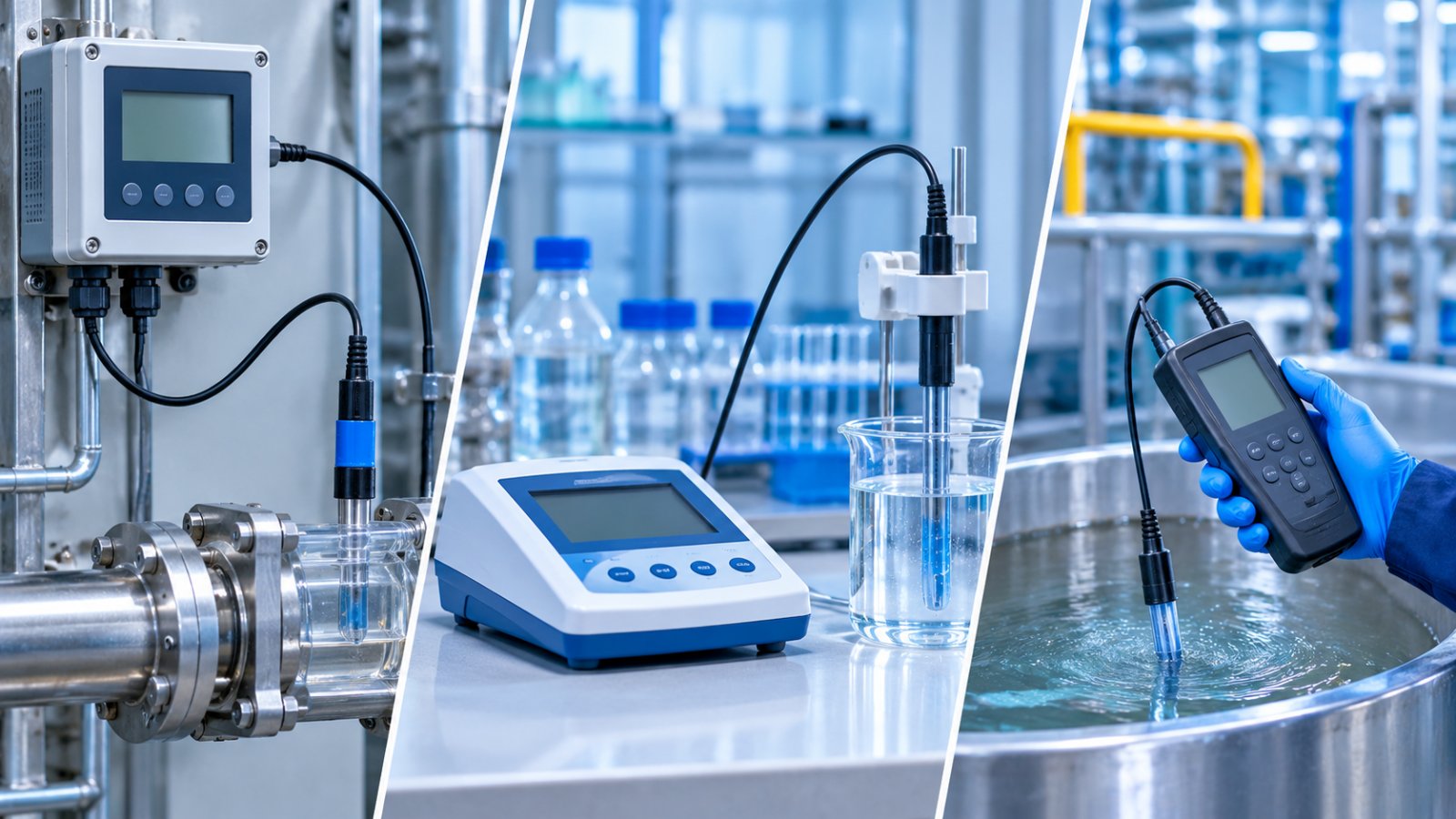
In short: Use an online pH controller or indicator when pH must be watched or controlled continuously in a tank or pipe — it has relays for dosing and a 4–20 mA output. Use a bench-top meter for lab and QC checks where accuracy and flexibility matter. Use a portable meter for spot checks around the plant. Most plants need an online instrument plus a bench or portable meter to verify it.
💧 Part of the Water Quality Measurement Hub — guides on pH, ORP, conductivity and TDS.
The Three Types Compared
| Online (panel / wall) | Bench-top | Portable |
|---|
| Purpose | Continuous monitoring and control | Lab analysis, QC, calibration checks | Spot checks in the field |
| Electrode | Industrial, permanently installed | Lab electrode, rinsed between samples | Rugged handheld electrode |
| Outputs | Relays for dosing, isolated 4–20 mA, alarms | Display; some have PC/printer output | Display only |
| Temperature compensation | Automatic with PT100 | Automatic or manual | Usually automatic |
| Typical users | ETP/STP, plating, RO, dosing skids | Labs, pharma QC, food QC | Maintenance, field engineers |
When You Need an Online Instrument
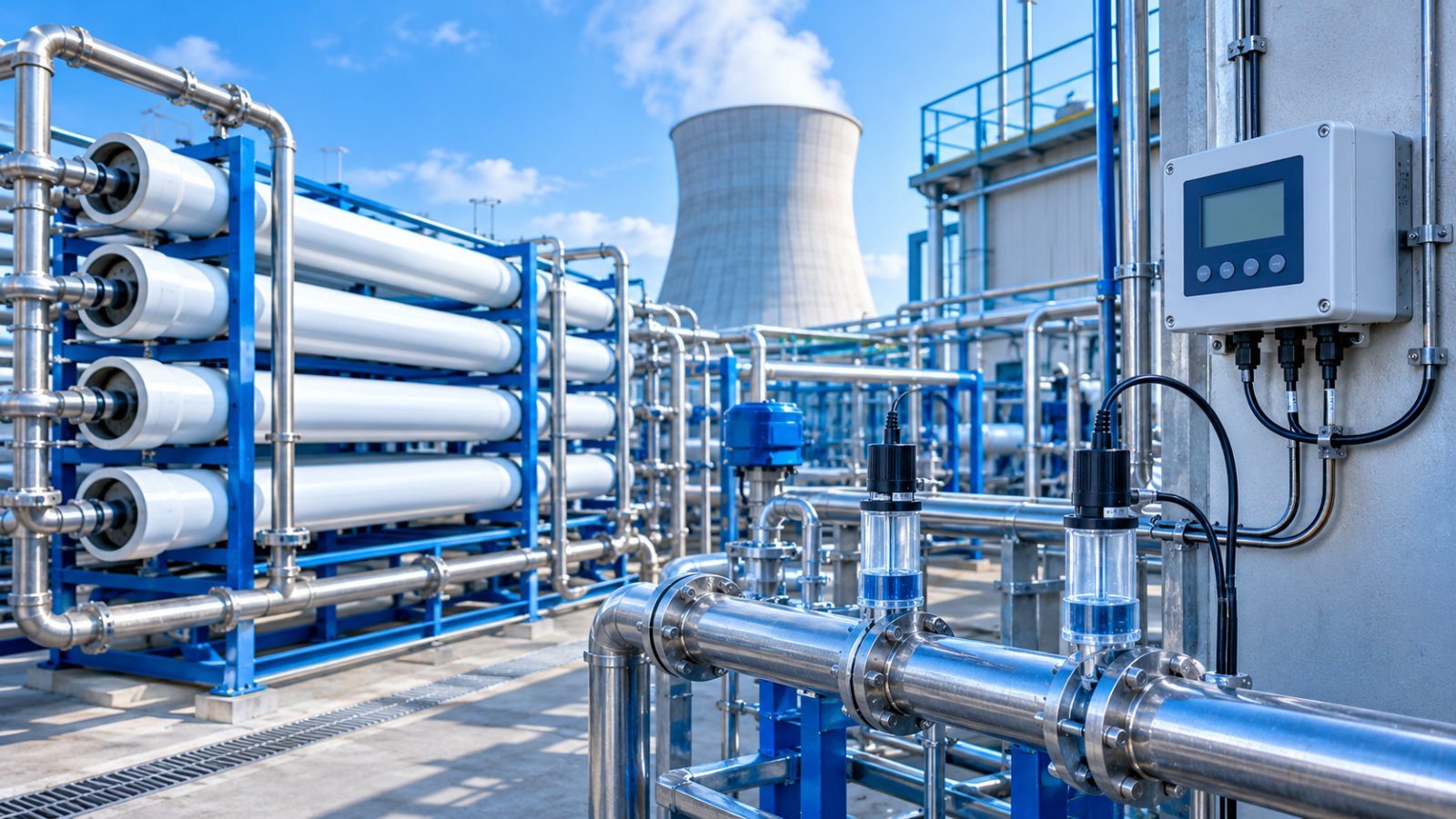
- pH must be controlled — acid or alkali dosing in neutralisation, plating or water treatment.
- Discharge must be recorded for compliance — the 4–20 mA output goes to a PLC, SCADA or data logger.
- An alarm is needed if pH goes out of range.
- Conditions change quickly and manual sampling would miss excursions.
A controller (with relays) acts on the process; an indicator only displays and transmits. See how a pH controller works and pH dosing pump control.
When a Bench-Top Meter Is Better
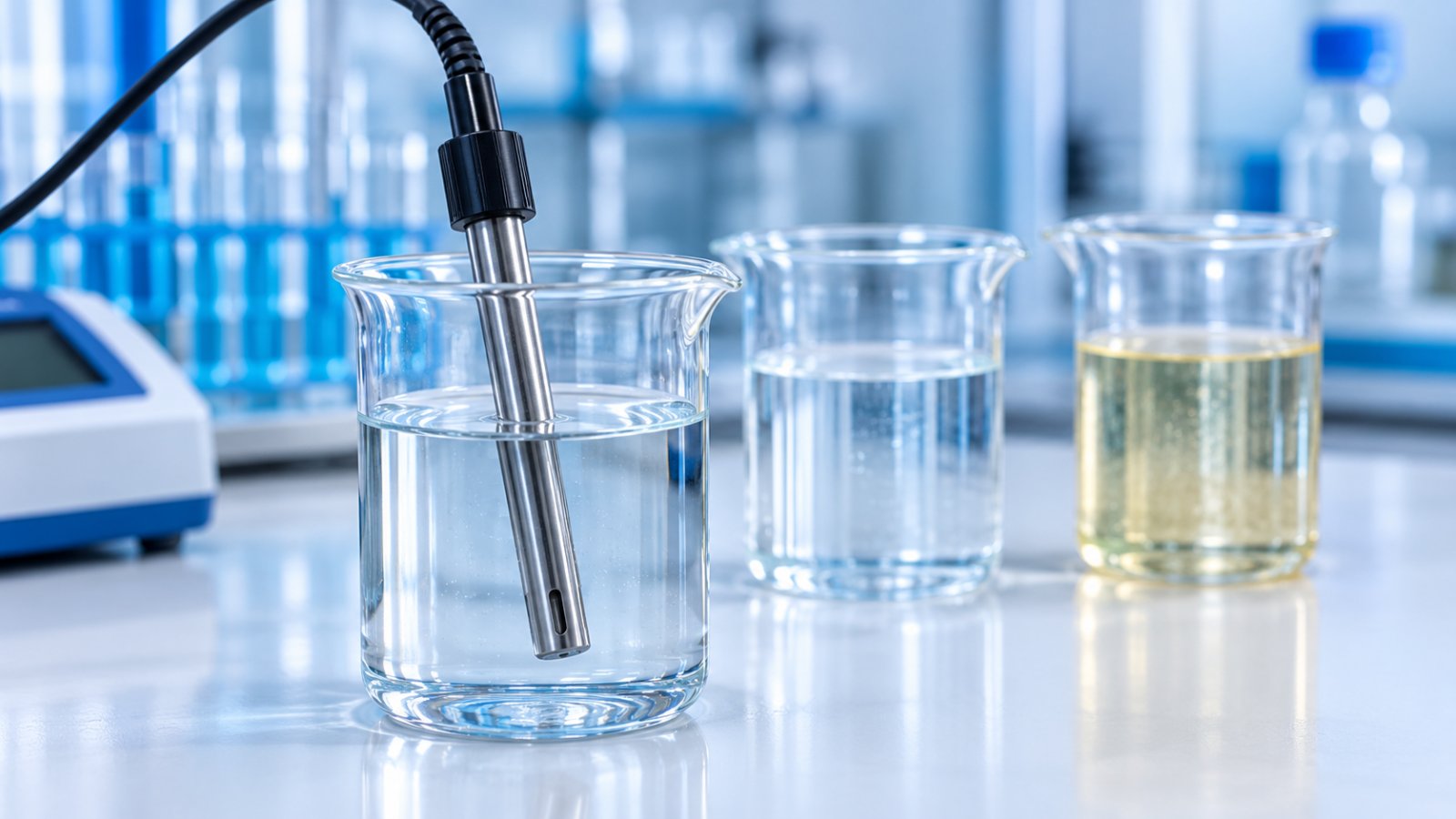
- Many different samples, each needing an accurate reading
- Checking the online instrument’s accuracy — a reference measurement
- Measuring other parameters at the same time (ORP, conductivity, TDS)
- Calibration records for audits
Accuracy and Calibration
All pH meters depend on the electrode. Calibrate with pH 7 and pH 4 (or 10) buffers, keep electrodes wet and clean, and check online instruments weekly against a bench reading. Guides: pH buffer solutions, electrode cleaning and storage, temperature compensation.
Countronics Instruments for This Job
Matching the instrument to the job:
- 112pH — online pH controller, 0–14.00 pH, two independent set points with 5 A relays (acid and base), isolated 4–20 mA, PT100 compensation, 96 × 96 mm panel — for dosing and neutralisation
- 110ph — online pH controller with two set limits — for simpler on/off dosing
- 122pH — online pH indicator with isolated 4–20 mA transmitter output — for monitoring and SCADA
- 121pH — online pH indicator — display-only monitoring
- 7100-01 — wall-mounted pH indicator with 4–20 mA — for plant-floor visibility
- 7215-01 — wall-mounted pH and ORP controller — for pools, cooling towers and treatment plants
- 7100-02 — lab/table-top pH, mV and temperature meter, LCD display
- 5501 — bench-top multi-parameter meter: pH, ORP, conductivity, TDS and temperature, auto buffer recognition
All models: 220 V AC standard; 110 V AC / 60 Hz, 12 V DC or 24 V DC on request. Test certificates traceable to national laboratories available.
Mistakes to Avoid
- Using a lab electrode permanently in a dirty process line.
- Relying on an online instrument with no reference check.
- Buying an indicator when dosing control is needed.
- No isolated output where the PLC and electrode share a ground.
Quick Checklist
- Control, monitor or spot check?
- Relays and 4–20 mA needed?
- Temperature compensation
- Reference meter for checks
- Electrode suited to the sample
Frequently Asked Questions
What is the difference between an online pH meter and a bench-top pH meter?
An online meter is installed in the process for continuous monitoring and control with relays and 4–20 mA output; a bench-top meter is used in the lab for accurate checks of individual samples.
Do I need a pH controller or a pH indicator?
Choose a controller if the instrument must switch dosing pumps or alarms; an indicator only displays and transmits the reading.
How often should an online pH meter be checked?
Weekly against a bench or portable meter, with recalibration when readings differ.
Can one bench meter measure pH, ORP and conductivity?
Yes — multi-parameter bench meters such as the Countronics 5501 measure pH, ORP, conductivity, TDS and temperature.
Why is an isolated 4–20 mA output important?
It prevents ground loops between the pH electrode circuit and the PLC, which cause unstable readings.