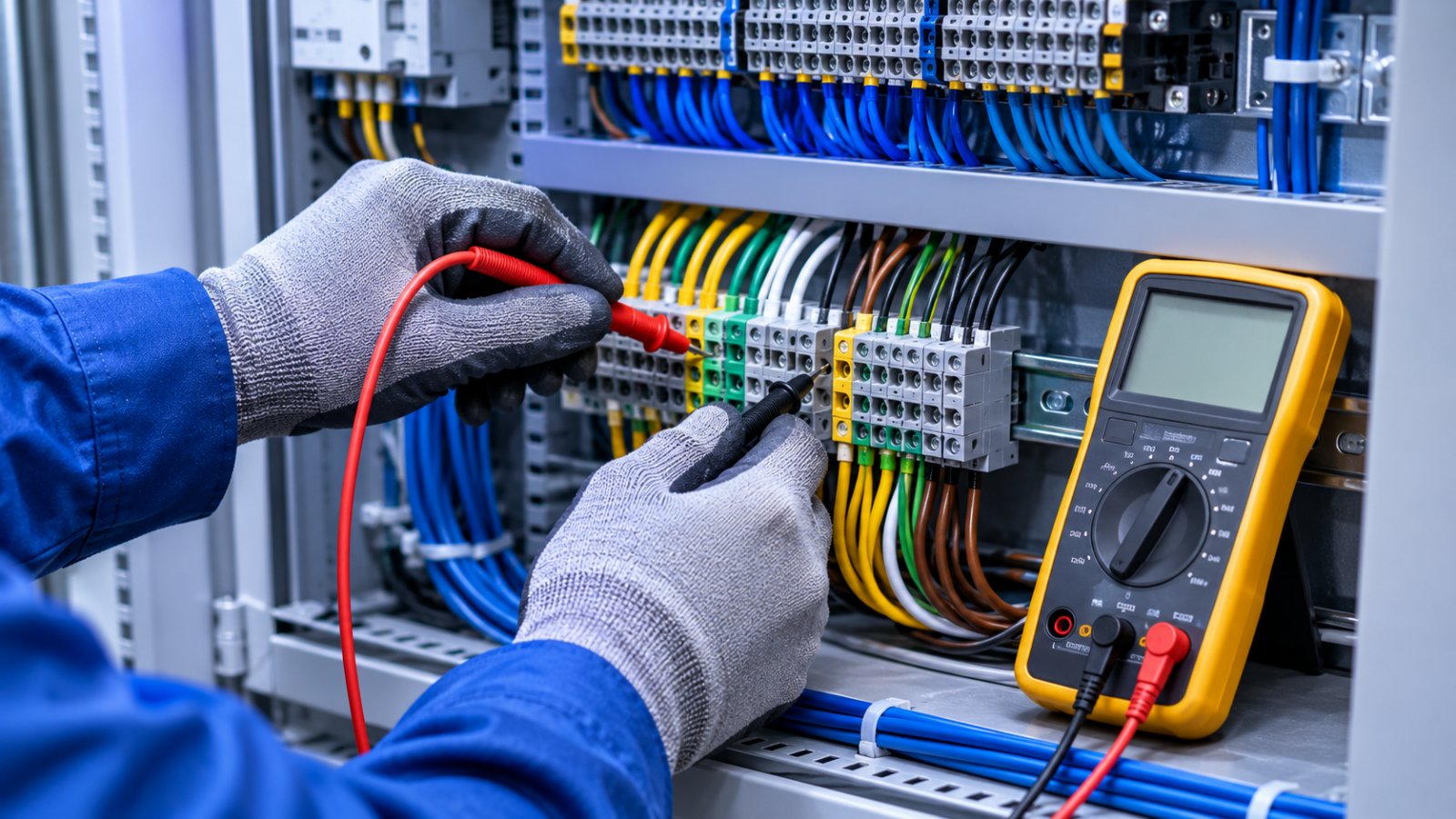
In short: Most thermocouple faults are wiring, not the sensor. Check in this order: right type selected in the instrument → polarity at every joint → same-type extension cable (no copper) → connections
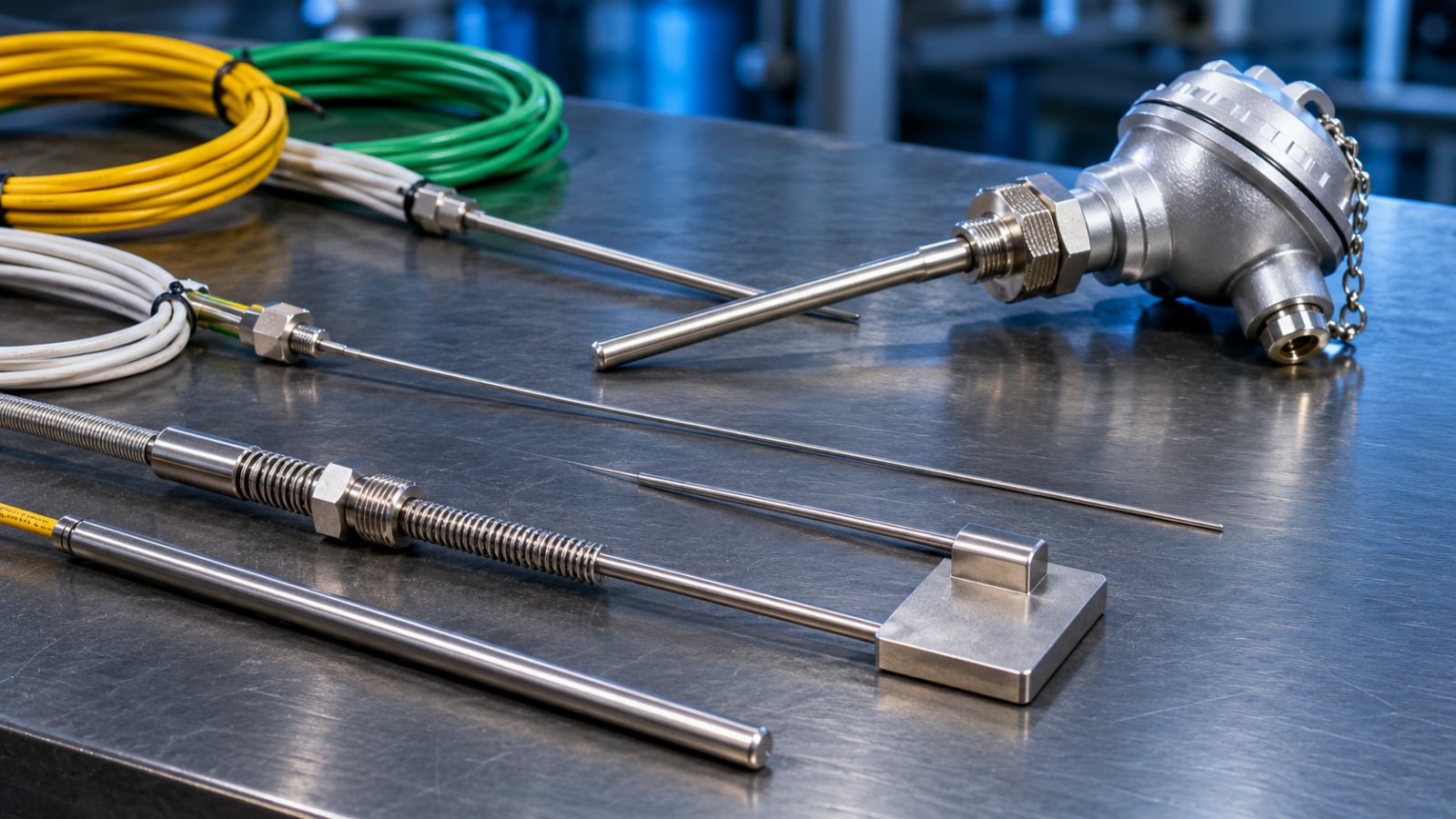
In short: A thermowell is a closed tube welded or screwed into a pipe or vessel so the temperature sensor can be removed without draining or depressurising the process. It protects the sensor
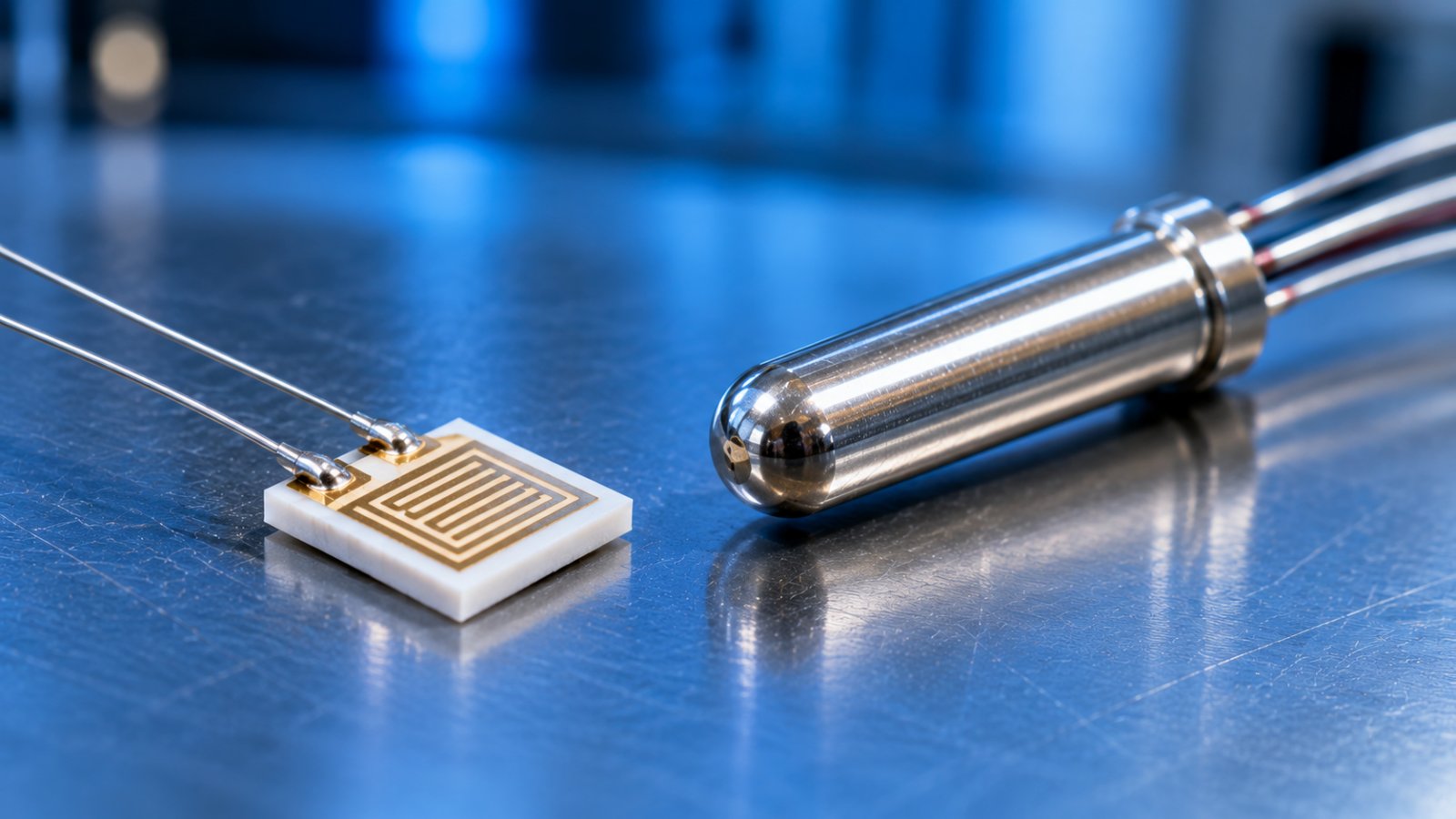
In short: A PT100 is a platinum resistor that measures 100 Ω at 0 °C and rises by about 0.385 Ω per °C (138.5 Ω at 100 °C). The instrument passes a small
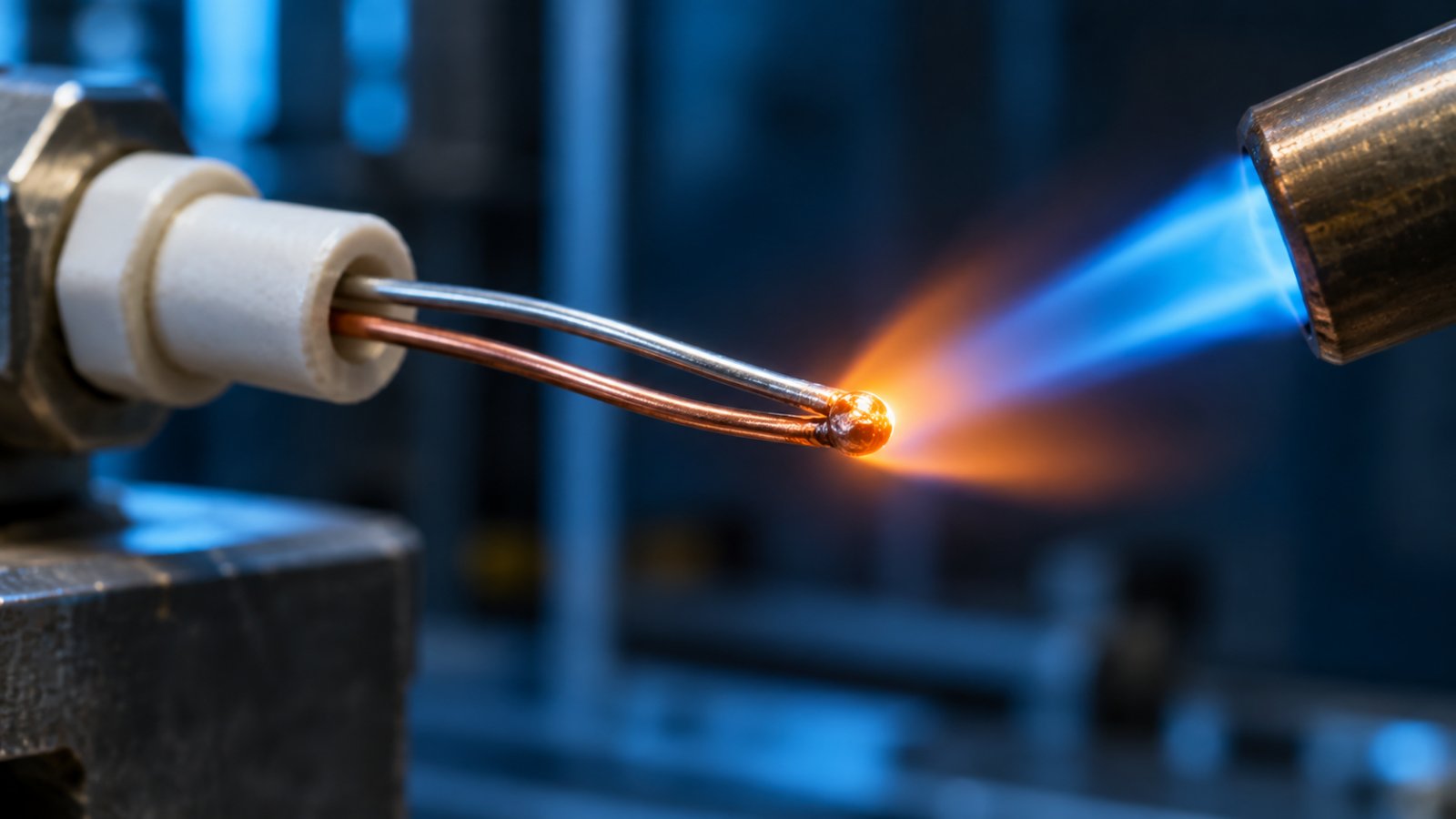
In short: A grounded junction (welded to the sheath) responds fastest but can pick up electrical noise; an ungrounded junction (isolated inside the sheath) is slower but immune to ground loops and best
In short: Type K (Chromel/Alumel) is the general-purpose thermocouple: about −200 to +1250 °C, roughly 41 µV/°C, IEC colour green (+) / white (−). Standard accuracy is ±2.2 °C or ±0.75 % above
In short: A thermocouple is two different metals joined at one end. A temperature difference along the wires produces a small voltage — roughly 40 µV per °C for Type K (the Seebeck
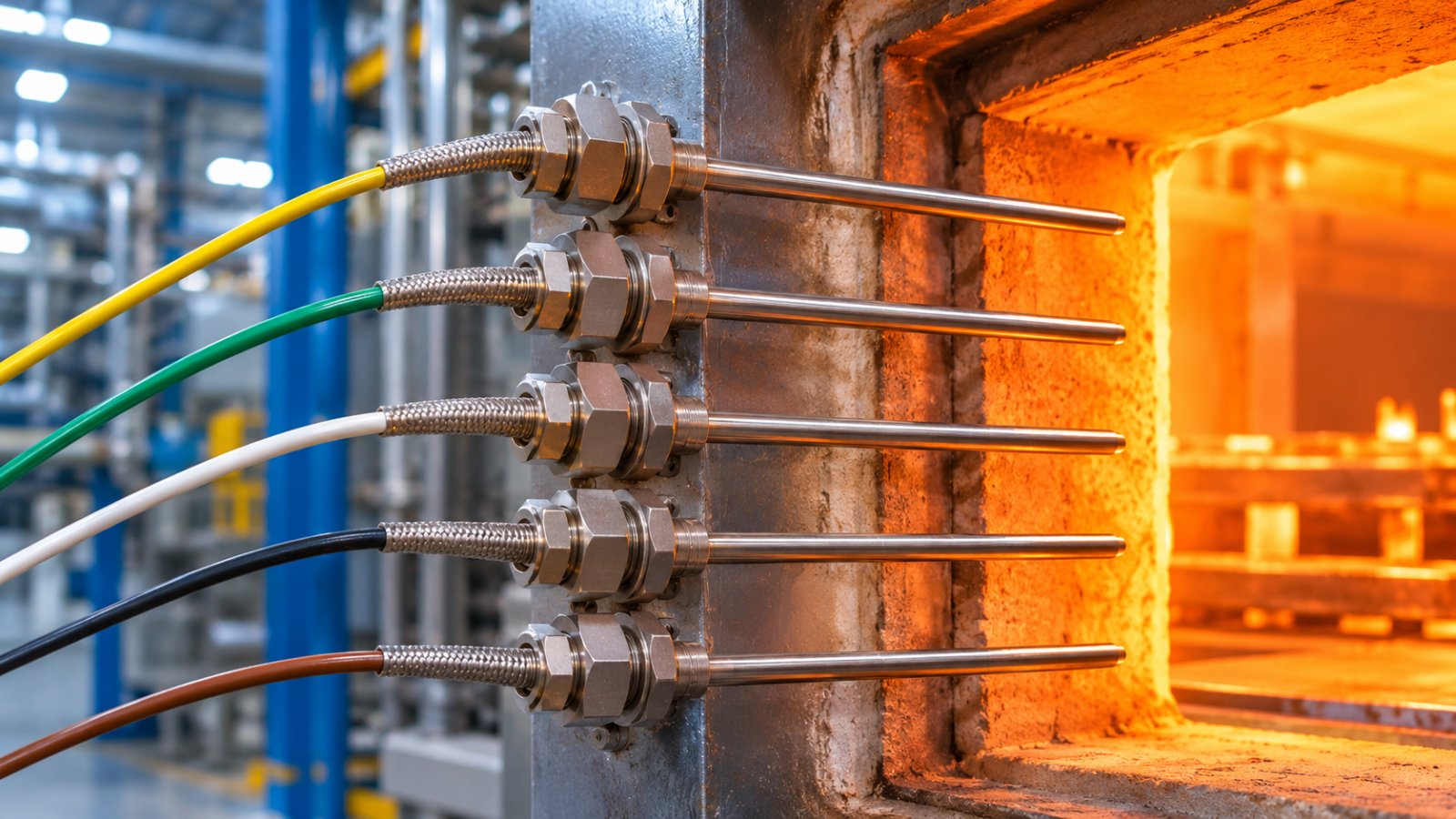
In short: Identify a thermocouple by its negative lead: it is red in the ANSI (US) code and white in the IEC (Indian/European) code. The positive lead and jacket then tell you the